Making the invisible visible
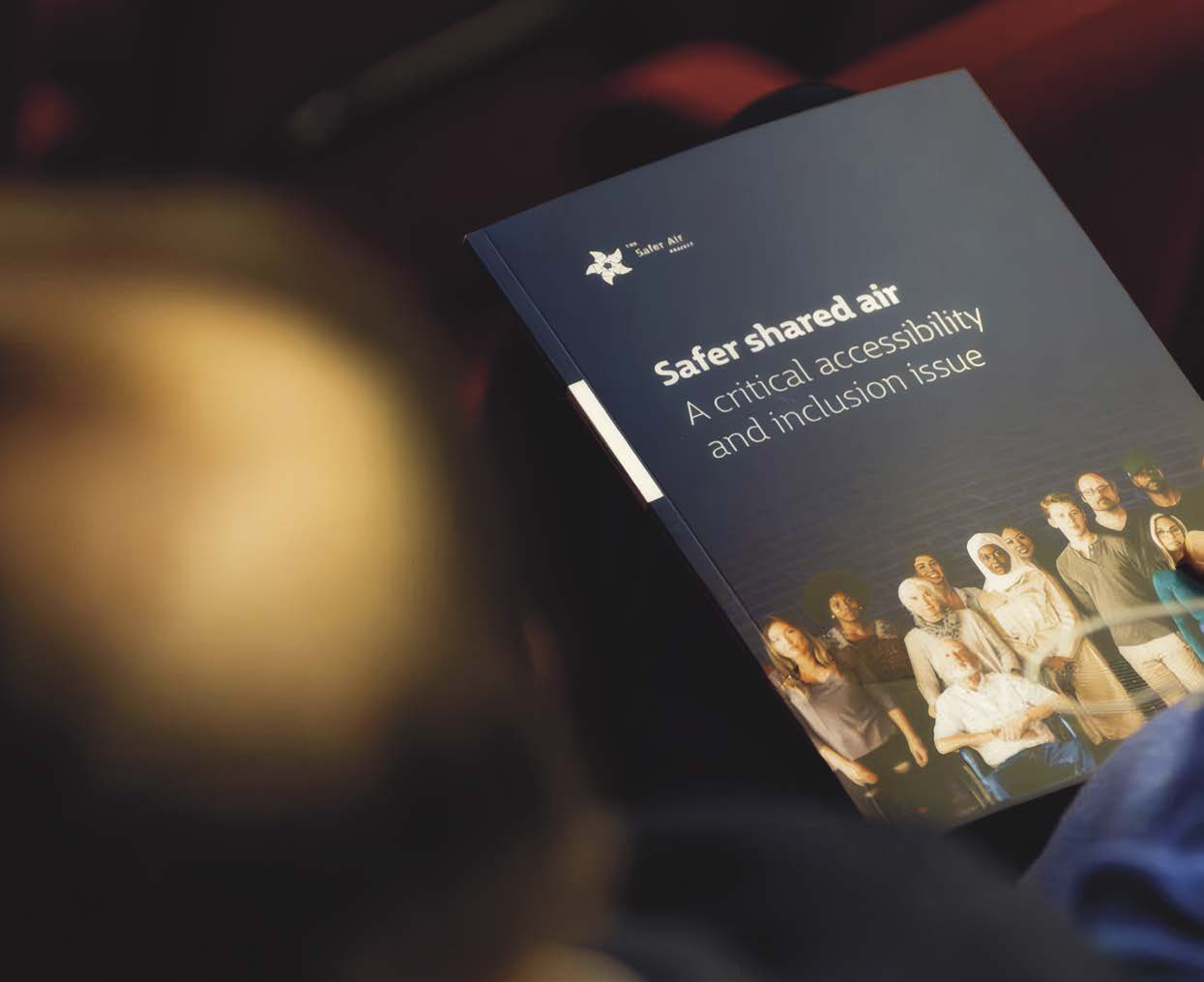
Plum Stone from the Safer Air Project reflects on the organisation’s 2025 conference, hosted at Parliament House in Canberra.
On Thursday, November 6, the Safer Air Project worked with AIRAH, the Academy of Science and the Burnet Institute to deliver a broad range of perspectives on indoor air quality (IAQ) across a full day of sessions. It was a fantastic forum for IAQ professionals and those with lived experience to share insights and perspectives on the issues that matter most to them. Here are some of the highlights.
Political prowess
One of the perks of hosting an event during a sitting day at Parliament House is proximity to some of Australia’s most powerful decision‑makers. We were delighted to have three serving politicians join us at the conference. Assistant Minister for Health and Aged Care, Rebecca White MP, delivered the opening address at the event. During her presentation, she took the opportunity to launch the Academy of Science’s new report into indoor air quality in Australia. “We’re realising that air quality is a health equity issue,” the Assistant Minister said in her speech. “One in two people in Australia has at least one chronic health condition, and some are more vulnerable to the health effects of the air they breathe.
“Anyone can become sick and even chronically unwell from polluted air, and the Australian government is committed to improving indoor air quality.”
Senator Michelle Ananda-Rajah also officially launched our new Parliamentary Friends of Clean Air Quality group, which she is co‑chairing with Dr Monique Ryan MP. This new PFG is a huge opportunity for engagement – it is the first ever parliamentary friends’ group for clean air, and we’re delighted that we were able to get it formalised in time for our event.
Dr Amanda Cohn MLC from the NSW Parliament announced that the NSW Legislative Council’s Health Committee has launched an Inquiry into Clean Indoor Air. The Safer Air Project has worked closely with Dr Cohn over the past two years; together, we will be creating an inquiry tool to help high-risk populations make individual submissions ahead of the deadline: January 29, 2026. We will also be encouraging all our stakeholders to make submissions.
Session 1: Real people, real stories
One of the key focuses of the event was lived experience. During the first session, patients and patient organisations came together to share their experiences of poor IAQ and heightened vulnerability, while also highlighting the need for change.
We were joined by patient advocate Glen Ramos and a panel of representatives from patient organisations, including the Immune Deficiencies Foundation, CF Together and Emerge Australia – all of which were partners in the Safer Air Project’s community support pilot program in 2024–25.
Session 2: The scientific perspective
In the second session, Distinguished Professor Lidia Morawska and Anna‑Maria Arabia OAM delivered an in‑depth presentation on the Academy of Science’s new report, which proposes a three-phase approach to achieve clean indoor air in workplaces. This would begin with a requirement to monitor air quality without a reporting standard, followed by a mandatory workplace reporting standard, and finally an IAQ standard for all public buildings.
Next up was Associate Professor Suman Majumdar from the Burnet Institute, who provided an overview of the work the institute is doing with the Pathway to Clean Indoor Air program. This was followed by an inspiring presentation from Liam O’Brien, Assistant Secretary of the ACTU.
Liam noted that recognising IAQ as an occupational health and safety issue could provide the fastest pathway to meaningful change. If workplaces were legally required to provide safe and accessible air to their employees or face financial penalties, the incentives to do so would be clear.
Session 3: Industry perspectives
Our final session brought together built environment industry experts, including representatives from the “triple crown” of Australia’s certification schemes: NABERS, the Green Building Council of Australia (GBCA) and the International WELL Building Institute (IWBI).
Professor Christhina Candido and Jack Noonan opened the session with presentations on the financial and productivity benefits for organisations that invest in improving their IAQ. Jack added a deeply personal touch to his presentation, sharing how his mother’s decades of working in substandard conditions in healthcare had affected her own health, making her particularly vulnerable to harmful air.
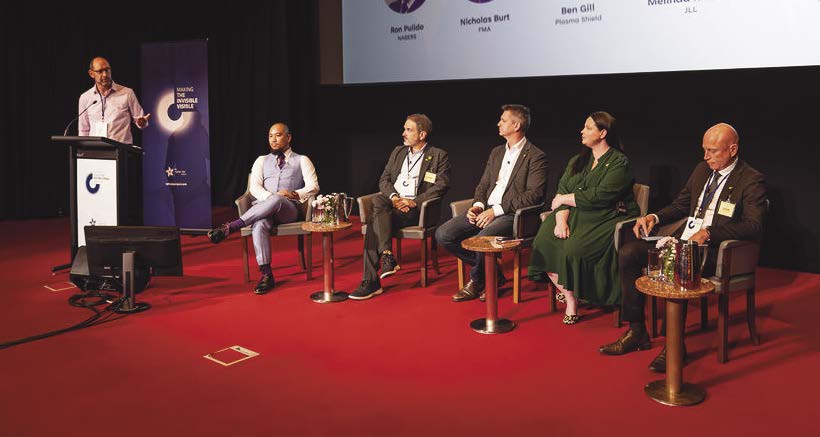
The final session was a panel discussion on the pathway to mandated standards featuring Ron Pulido (NABERS), Jorge Chapa (GBCA), Ben Gill, Affil.AIRAH (Plasma Shield), Mel Mandla (JLL) and Nic Burt (FMA).
One of the most powerful messages to come from this session was the need to change the mentality around air quality in shared spaces. When we enter a building, we expect it to have ramps, elevators and accessible bathrooms for people living with physical disabilities. We also expect the building to have functional fire safety systems, including alarms and sprinklers.
Those issues are so well regulated and understood within the industry that we no longer need to think about them. Why shouldn’t we expect the same buildings to have safe, accessible, and monitored air quality?
This article appears in Ecolibrium’s Summer 2025–26 edition
View the archive of previous editions
From our advertisers

Recent articles


Latest edition
See everything from the latest edition of Ecolibrium, AIRAH’s official journal.