The art of working within the unknown

Gary (Guru) Raman, Affil.AIRAH, explains why building refurbishment projects present complex challenges for HVAC and building services systems.
If there’s one lesson I’ve learnt over the years, it’s that refurbishment is never like building something new.
In new construction, you always start with a blank canvas. This allows you to coordinate designs with other trade models, meet code compliance requirements to the latest standards, predict the unknowns, and navigate issues before they can become critical at site. However, in refurbishment you always start with history, a web of old systems, hidden elements in the ceiling voids, incomplete documentation and huge expectations from the client.
Working on an existing facility is like touching a live honeycomb structure – everything is interconnected and fragile. You need to move with intention, foresight, and respect for the existing structure and system’s anatomy.
Refurbishment projects demand not just engineering knowledge, but also the mindset of a leadership strategist – someone who can anticipate problems before they surface, manage stakeholders, and deliver modern performance standards without compromising safety, quality and compliance.
Why refurbishment is different
New buildings are forgiving. If ductwork needs to be changed or the plant room needs to be moved, these issues can be resolved before the slab is poured. Refurbishment doesn’t offer that luxury. Every penetration, pipe and ceiling has history attached to it; you can’t easily move other existing services or building elements to accommodate the new mechanical services. Let’s explore the real-world challenges of refurbishment projects and how they differ from the world of new construction.
The unknowns above the ceiling
In a new building, every duct, pipe, and cable tray is modelled and clash-coordinated in BIM before construction begins. In refurbishment, you often have only partial as-built drawings (mostly decades old) and reality rarely matches what’s documented.
Until you open the ceiling, you don’t truly know what you’re dealing with. You may find redundant services, non-compliant insulation, asbestos remnants, or loose cables over the ceiling. Each discovery can change your design or your installation sequence.
That’s why intrusive investigations during early stage are invaluable for capturing all unknowns and clarifying the scope gap early.
Documentation that doesn’t match reality
Tender documents and existing drawings are often prepared under time pressure and based on assumptions. In refurbishment, those assumptions rarely hold true. Equipment schedules may list plant that was replaced years ago. Ductwork shown as accessible may be sealed behind walls that are not even at site.
This disconnect between paper and site conditions is one of the biggest sources of cost escalation. Estimators price from the drawings, but when site reality surfaces, variation after variation follows.
Unlike new builds, where documentation and site conditions are the same, in refurbishment, engineers must verify every key element – including room use and occupancy rates, heat loads and airflow paths – during the design stage. The best approach is to rebuild the documentation from the ground up: only proceed one you’ve checked, measured and confirmed all existing site conditions.
Code compliance and PCA involvement
While new builds are designed under a consistent regulatory framework, refurbishment projects are uniquely caught between old systems and new codes. You can replace old equipment with new, but complying with the latest NCC requirements – AS 1668.1 (fire and smoke control), AS 1668.2 (ventilation), AS 4254.1 (ductwork), and AS 3666 (microbial control) – is a different story altogether. Existing site limitations or partial re-use of certain elements of the existing system can wreak havoc with compliance.
For this reason, it’s essential to collaborate with fire engineers and the principal certifying authority (PCA) early in the project to determine what constitutes a “trigger for compliance”. A partial replacement may unintentionally activate obligations to upgrade entire systems, adding complexity and cost.
Safety and heritage constraints
Refurbishment work often happens in live environments like schools, theatres, or hospitals, where operations continue during construction. Safety, access, and traffic control become primary design drivers.
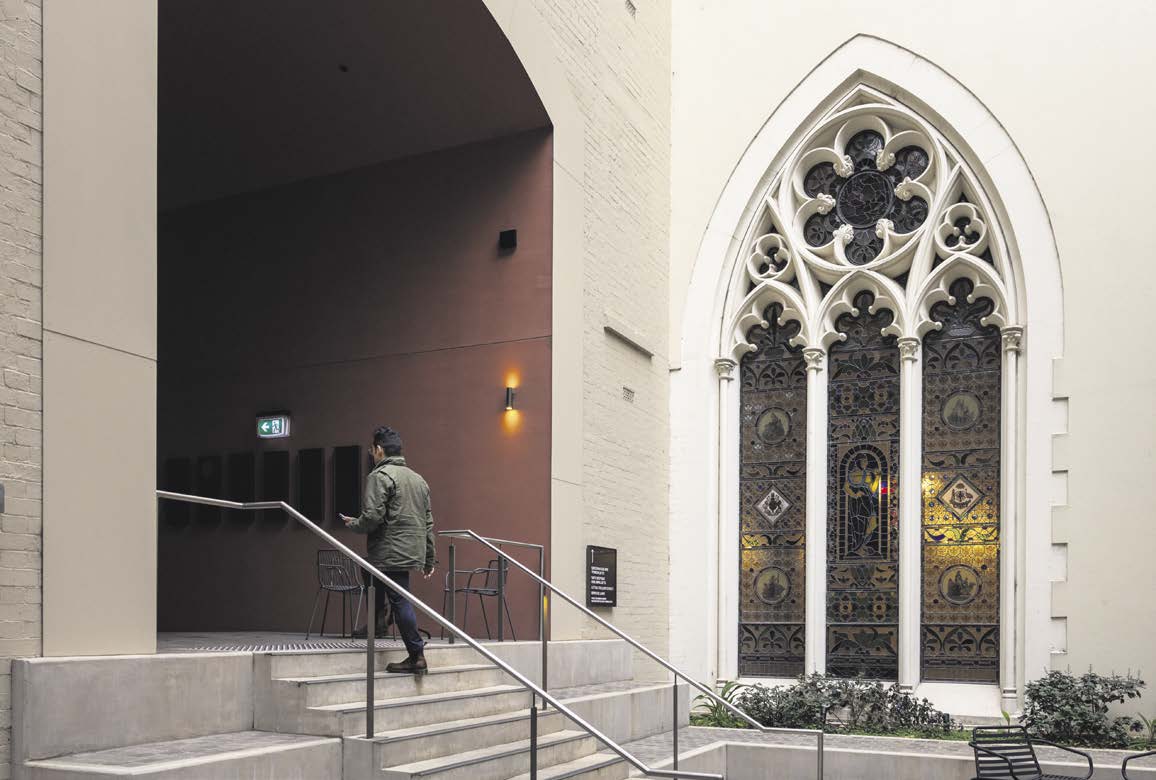
Heritage buildings add another layer of difficulty. Penetrations through protected structures must meet strict heritage and aesthetic guidelines. You can’t simply install what’s convenient; every solution must be both technically sound and culturally sensitive.
For engineers, this means balancing innovation with preservation of existing structures to design systems that blend into history while meeting today’s performance standards.
The noise challenge
Noise is one of the most underestimated risks in refurbishment projects. In a new build, acoustic performance can be engineered from scratch through selection of proper building fabric, duct linings, plant isolation, and equipment zoning. In refurbishment, however, noise control must work within existing limitations like existing walls, shared risers, and plantrooms close to occupied spaces.
Replacing air handling units (AHUs) or chillers in legacy structures requires careful coordination with acoustic consultants. Even temporary noise during construction can violate council or environmental regulations, particularly in public or residential precincts.
Mitigation requires scheduling noisy work during off-peak hours, selecting low-noise equipment, and providing proper insulation or attenuators wherever possible.
Aesthetic and architectural integration
Refurbishment often takes place in architecturally sensitive or publicly visible facilities where mechanical systems must remain invisible yet effective. Unlike a new build, where service zones and ceiling heights are designed for concealment, refurbishment requires creative integration like routing new ducts through old cavities, aligning diffusers with decorative finishes, or matching grilles to heritage requirements.
Aesthetics play a surprisingly significant role in engineering success. Poorly placed grilles or visible ductwork can undermine years of architectural restoration. Collaborating early with clients and heritage officers ensures that HVAC upgrades enhance the building’s visual integrity rather than compromise it.
Structural and access limitations
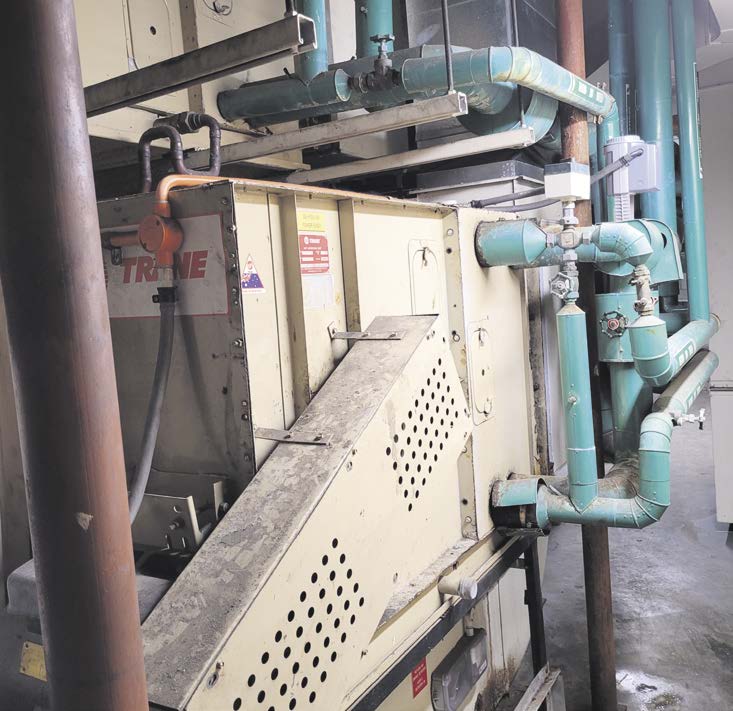
In a new building, structure follows design. In refurbishment, design must adhere to the existing structure. You can’t raise the existing ceilings or route the ductwork wherever you like, and plantroom equipment must be installed through existing corridors or lifts.
Equipment replacement becomes an exercise in logistics and geometry. A chiller or AHU might need to be constructed into modular sections, craned in during night hours, or slid through narrow passages. Most times, equipment selection is dictated not just by performance alone, but by how it can be brought into the building.
This constraint makes early coordination with structural engineers, builders and clients essential. Even minor access changes like a doorway or a stair width wrongly measured can decide whether an installation succeeds or stalls.
The domino effect of scope creep
Refurbishment rarely stays within the original scope. Every time you touch an old system or open up the ceiling, you risk uncovering new issues. Even existing services like smoke detectors, PA systems, and sprinklers that weren’t your problem can become part of your scope of work the moment you touch them.
Without clear change management and transparent communication, scope creep quickly turns into budget blowouts.
The key is to allow contingency in both cost and time. Treat new findings not as surprises but as natural consequences of discovery. The best refurbishment engineers forecast risk early, document each variation clearly, and maintain alignment between client expectations and evolving realities.
Safety in tight and live spaces
Refurbishment works often occur in confined ceiling voids, aged roof cavities, or service risers not designed for modern safety standards. Working in these environments carries elevated risks: falls, heat exposure, poor ventilation, electrical proximity, and even asbestos hazards.
Unlike a new site, where construction sequencing can ensure safe access, refurbishments demand creative access solutions like temporary walkways, modular scaffolding, or prefabricated assemblies installed from below.
A robust safety in design (SiD) process is critical to identify not only construction hazards, but also maintenance pathways for the future. Every new component must be safely installable and serviceable or the problem is simply deferred.
Forecasting, planning, and intentionality
In refurbishment, you cannot afford to figure out things along the way. Every decision requires foresight. What if the riser is smaller than expected? What if ceiling height limits duct routing? What if old penetrations do not align with new ductwork?
Planning must be methodical, and every agreement must be documented in writing. The moment clarity slips, delays mount, and contractual exposure increases.
This is why I compare refurbishment to performing surgery: every move should be intentional and justified by data and facts. You must forecast complications before they occur and communicate solutions before problems escalate.
Leadership on a tightrope
Refurbishment projects test leadership more than any textbook or podcast ever could.
They bring together clients, consultants, contractors, and certifiers, each with valid but competing objectives. The engineer often stands at the centre, translating technical realities into actionable decisions.
Leading a refurbishment is like walking a tightrope between two mountains; one side is technical compliance, the other is operational practicality. Lose balance, and the project can tip into delay, dispute, or dissatisfaction.
Strong leadership in this environment means:
- Setting clear expectations with clients about unknowns and risk
- Collaborating closely with clients, consultants, and certifiers
- Making informed, transparent decisions under pressure
- Protecting both compliance and quality, even when cost or time pressure mounts.
This isn’t about authority; it’s about coordination, proactive communication, anticipation and problem-solving. In refurbishment, leadership is the invisible system that holds everything together.
Skills, proactive decision-making and partnerships
Refurbishment is where technical skill meets strategic leadership. You must see beyond the drawings, predict how one action affects another, and align diverse stakeholders under shared intent. It’s not just about building services – it’s about engineering trust, managing change, and executing with clear strategy.
When done thoughtfully, refurbishment is deeply rewarding. It transforms risk into resilience and brings old spaces back to purpose. In the end, the mark of a good refurbishment is not just how new it looks, but how seamlessly it performs – as if the building itself has quietly evolved.

This article appears in Ecolibrium’s Summer 2025–26 edition
View the archive of previous editions
From our advertisers


Recent articles



Latest edition
See everything from the latest edition of Ecolibrium, AIRAH’s official journal.