Reimagining the humble cabin

Samantha Bothma M.ACould clever design improve the thermal performance of holiday cabins and reduce the energy needed to cool and heat them? Willow Aliento investigates.
Caravan parks are a mainstay of Australian family holidays. For those who don’t have their own van, holiday park cabins are an increasingly popular choice. They’re also the most lucrative form of accommodation for holiday park operators, with Caravan Industry Association data finding cabins generated around $1.9 billion of revenue for park and campground operators in 2024. That represents 62% of the sector’s total revenue.
However, the thermal performance and energy efficiency of cabins is often sub-par. Standard accommodation has thin walls, minimal insulation, single glazing … so during both summer and winter, the experience of staying in a cabin can be uncomfortable. With some thoughtful design and more appropriate materials, this could be about to change.
The cabin of the future
South Australian company Future Property Group (FPG) has invested three years of research and development into designing nature-draped, solar-powered homes away from home. The first two prototype homes are about to be installed on a site at Gawler Caravan Park in South Australia. FPG Managing Director David Cummins is a physiotherapist by training who also holds qualifications in construction management. He spent two decades in the field working on human bodies while also leading the delivery of hospital new builds, extensions and refurbishments. Now his goal is to embed the core principles of the Living Building Challenge into prefabricated eco-cabins. According to Cummins, the health of both humans and the planet are key drivers of the project.
“I think one of the biggest fallacies about the world of sustainability and the climate change is that someone else will fix it, when in actual fact, it’s everyone’s responsibility,”Cummins says.
“[Founding FPG] was a beautiful opportunity to start my own company that wasvalue‑driven, purpose-led and really making sure that the sustainability angle was the number one KPI for the whole team, wherewe are all guided by our purpose to reduce the carbon footprint of the property sector.”
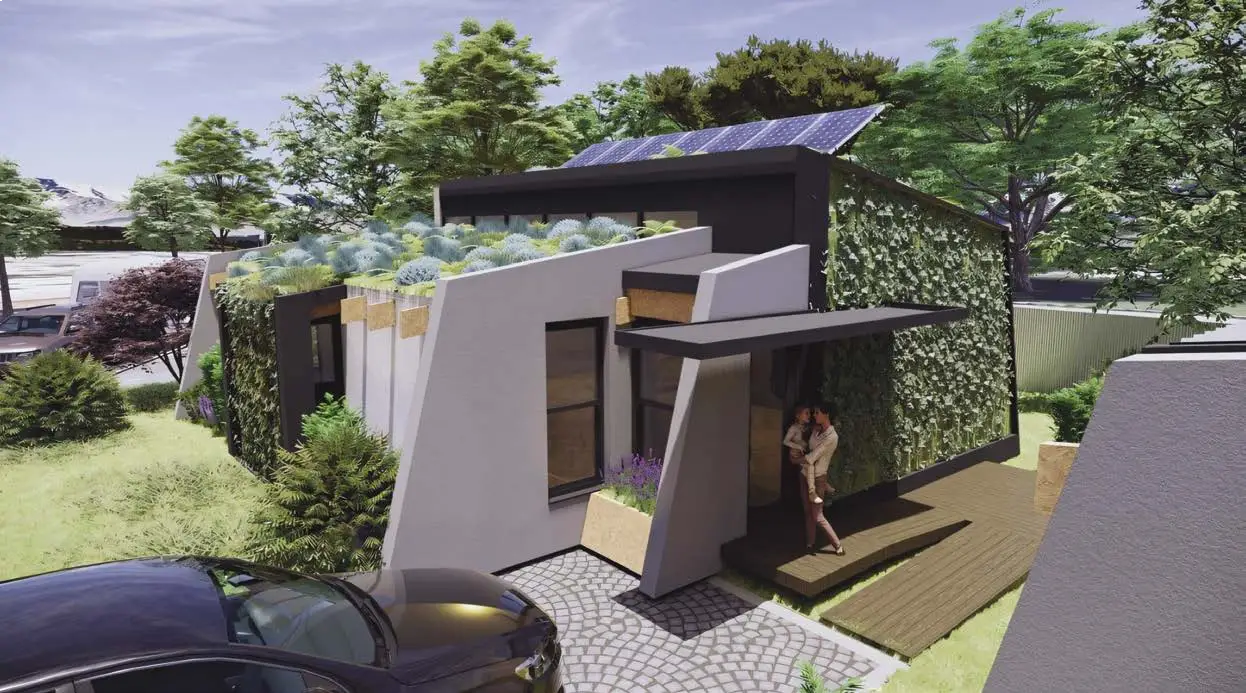
Working with a team including architectsHames Sharley, structural engineers 4D,Marshall Day Acoustics, SemperGreenand Tindo Solar, with Arup as sustainabilityadvisers, FPG has designed a prefabricatedtwo-bedroom cabin blueprint. It featuresa unique biosolar roof, green wall andoptimised performance across energy,human health and materials health to targetcore certification requirements for theLiving Building Challenge.
Applying the theory
In partnership with Jenny Sinclair, Jo Good win and Miles Cockington from Gawler CaravanPark, two of the cabins are being erectedon a brownfields site. They will be part of a world-first study conducted by experts fromUniversity of Technology Sydney (UTS) to quantify and demonstrate the performanceof a dwelling with a biosolar roof compared to a cabin without.
The research is being led by Professor SarahWilkinson, an expert in sustainable building design and healthy homes, and Dr Peter Irga, a leading expert in integrated greening and solar PV applications including agrivoltaics and the new kid on the block, biosolar roofs.
The Gawler project will be the first time a biosolar roof has been installed on a modular home, and only the third roof of its type in Australia.
Cummins says the structural engineering proved challenging, as the combined weight of the green roof, solar panels, roof access system and safety system meant the roof structure weighs a total of seven tonnes. This was something 4D, the structural engineers, had toresolve while retaining the open space volumes and high ceilings of the living areas.
Both cabins have been designed and planned for optimal passive solar orientation, and a thermally efficient building fabric. The cabin with the biosolar roof embeds nature‑positive design that supports air quality, biodiversity and human wellbeing, while also showcasing the technical benefits in terms of solar panelenergy generation performance.
What are biosolar roofs?
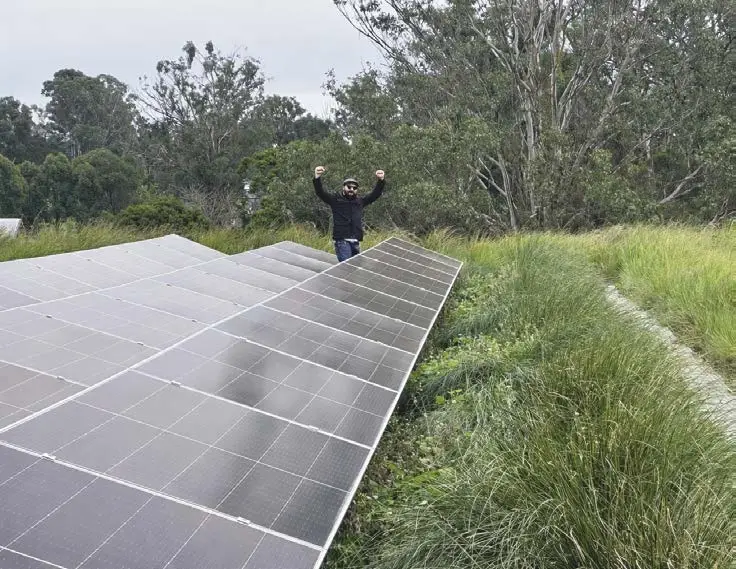
Biosolar roofs are exactly what they sound like: a combination of biology and solar power generation. You take a living roof with a diverse range of plants and greenery, then put solar panels on top to create a roof that supports biodiversity while also generating renewable energy
This is much more than an aesthetic choice. From an energy perspective, biosolar roofs are expected to produce more energy per panel than a system installed on a roof without greening. As Dr Peter Irga from UTSex plains, this is because the green roof cools the panels, significantly improving their sunlight‑to‑power conversion rate.
The roof also has an insulating effect; it takes the edge off summer heat, while helping the building retain warmth in winter.
“You get less diurnal variation and more stable temperatures inside,”
Irga says.
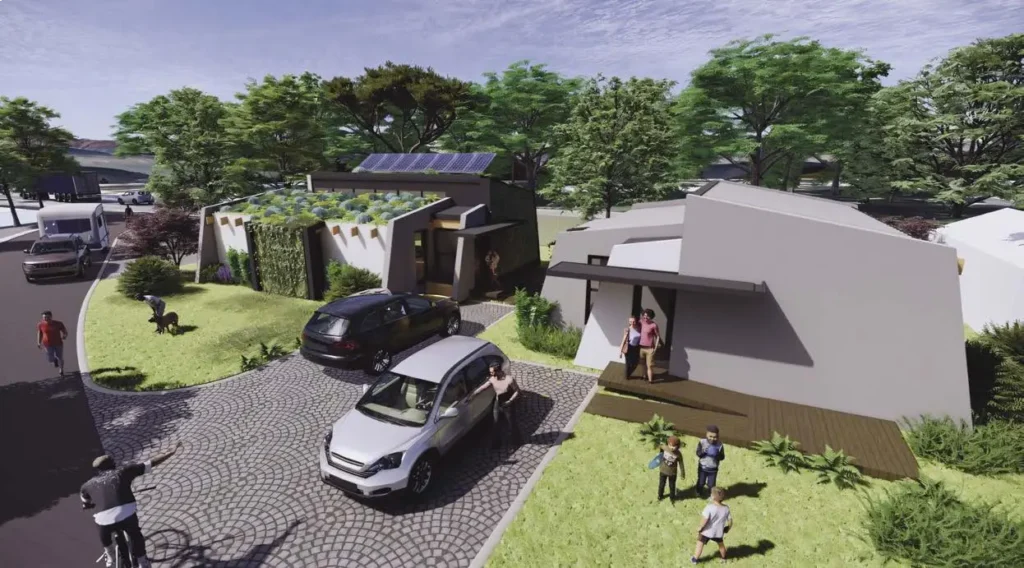
Celestory windows at the junction of the two sloped roofs supports passive ventilation strategies in the cabins
“I am excited about David’s concept and potentially targeting communities that would benefit most from housing that is affordable and assembled quickly.”
Dr Peter Irga
Quantifying the benefits
Dr Irga says the eco-cabins’ integrated biosolar, green walls and bio-based building materials were all areas that interested the UTS research team.
The goal of their part of the project is to quantify the benefits of biosolar and compare the energy and thermal performance aspects through comparison with an equivalent building structure.
More broadly, Irga says he sees an opportunity for these kinds of structures to be adopted for places including work camps for FIFO workers.
FIFO camps use structures that are “designed to be set up as quickly as possible”, but may have poor passive thermal performance and energy efficiency. In many of these regions, the opportunity for occupants to be able to see plants and greenery in the form of green walls and biosolar roofs can also benefit wellbeing.
Having green walls and green roofs can protect against lateral heat entering a building, while also improving air quality. The plants help reduce the CO₂ that accumulates indoors due to breathing, ensuring that air coming in from outside is oxygen-rich.
The design of the biological elements of the green roof incorporates a mix of species, which has several practical advantages.
“Mixed plants support biodiversity,” Irga says. “Also, as the plants compete with each other, the rate of photosynthesis and respiration is higher, which increases the local cooling effect.”
He says the UTS team want to take the findings of the research project and “see what we could do bigger and better.”
“Let’s roll it out at scale. I am excited about David’s concept and potentially targeting communities that would benefit most from housing that is affordable and assembled quickly – for example remote Indigenous communities – to reduce reliance on diesel.”
Business as (un)usual
Cummins has been frustrated by the lack of leadership on sustainability in the construction sector, often due to perceptions around costs and budgets. One of the motivations for starting Future Property Group was to ensure sustainability is the “number one principle”
“Then the money will come,” he says. “The commercial viability of this is phenomenal because all we’ve done is take a little bit of extra time, follow the research, and now we forecast the benefits including the commercial viability of our EcoHomes.”
For the EcoHomes, the cost-benefit equation has been given a lifecycle lens. Instead of the typical CapEx vs OpEx split, the costs for construction and operation are being considered over the 60-year design lifespan of the building.
For most building projects, a target of 15–20-year payback on investments in building performance, building systems and energy efficiency is standard. Cummins anticipates the EcoHomes will achieve payback in around four years, and the study by UTS will help verify this.
The technical specs
The biosolar roof isn’t the only innovation that the team hope will help reduce operational costs; both the building fabric and the building services are expected to deliver savings.
The cabins are effectively two separate buildings joined together, with one roof at a 10° incline and the other at a 5° incline. Where they meet, a row of operable clerestory windows supports a passive ventilation strategy for the living area.
Split system air conditioners from 2.5–3.5kW are being installed in the living areas. These will have hard-wired wall-mounted controls, which addresses one of the major maintenance and guest pain points at holiday parks – the way remote controls disappear. The splits have high seasonal COP and seasonal energy efficiency ratings and and are also integrated with a smart occupancy system, which aims to reduce energy demand.
As Cummins explains, visitors often leave the aircon going when the windows are open, and also when they head out.
The Gawler cabins will have sensors installed on every window and door to automatically switch off the aircon when these are open. Cummins says this investment was a “no‑brainer” because park operator data shows that air conditioning is responsible for between 80–86% of holiday cabin energy use
“Everyone always thinks it costs more money (but as an operator) you actually spend less money,” Cummins says.
Local supply chains
Cummins suggests developers in the modular space generally have a “rush and ready” approach, which FPG aims to avoid. He describes the level of thought and planning going into the cabins as bringing a “tier 1 best practice approach to tier 3 industry.”
Fine-tuning the supply chain to localise and onshore everything has been a key part of the process. Onshore sourcing made sense from a sustainability point of view and turned out to be entirely achievable.
The solar panels from Tindo are made in South Australia, and the Sonnen batteries are also being assembled in SA. The water tanks for the rainwater capture and reuse system are being sourced from a fabricator in Gawler, and the timber construction panels are also being sourced from within Australia.
Other key elements of the specifications include high‑performance insulation in floorsand ceilings; double-glazed energy‑efficient windows and doors; a hot water heat pump; LED lighting; and toxin-free materials for all furnishings, finishes and other elements, to ensure the cabins align with the Living Building Challenge (LBC) requirements around health and wellbeing.
Cummins says the team is targeting LBC core certification only; in the arid South Australian climate, achieving the requirement to operate entirely using water captured onsite is not feasible, he says.
Nonetheless, it will be the first prefab project in the world to attempt LBC certification, and the first Australian project with a biosolar roof to target the credential.
Cummins says the whole project process is “90% planning and 10% execution”.
“Especially in the world of prefab, you have to plan it. We’re guided by research – that is literally one of our values – and we build with integrity.”
From pilot to production line
Proof of concept in the form of completed cabins is expected by mid-2026. Potential clients – including eco-resort operators and private sector build-to-rent developers and operators – are already lining up.
State governments have been speaking with Cummins about potentially hundreds or even thousands of dwellings. They have the quotas under the national housing accord, and a growing awareness that the current product being delivered is not best practice for the environment.
Cummins says the next phase of growth involves establishing a manufacturing facility using robotics in 2027 or 2028, possibly in Geelong.
“It’s a win-win-win for people, profit, planet – so I’m quite excited about that,” Cummins says.
“(There is) all this research saying people can build faster and be more productive … we need to inspire and lead through hope, not fear.
“The common theme or message that we’re getting from people is: ’We’ve been looking for this, we’re eco conscious’. Evidence will guide us towards a more sustainable future.”
The ’patient-centred’ approach
Cummins says one of FPG’s core values is planning with precision. That means identifying the roots of problems, including the low level of innovation in construction and the outsized carbon footprint of the sector.
“Construction is the second least innovative industry in the world and has the highest carbon footprint. That’s not a law of nature like gravity, that’s just a really bad statistic,” he says.
“For any project, it’s important to get the planning right – 90% planning, 10% execution. When you rush there is risk and when you plan it is near perfect. Why rush a project with guaranteed errors when you can plan a project with minimal concerns?
“We have to get the foundations right, and then we can grow.”
“Construction is the second least innovative industry in the world and has the highest carbon footprint. That’s not a law of nature like gravity, that’s just a really bad statistic.”
David Cummins
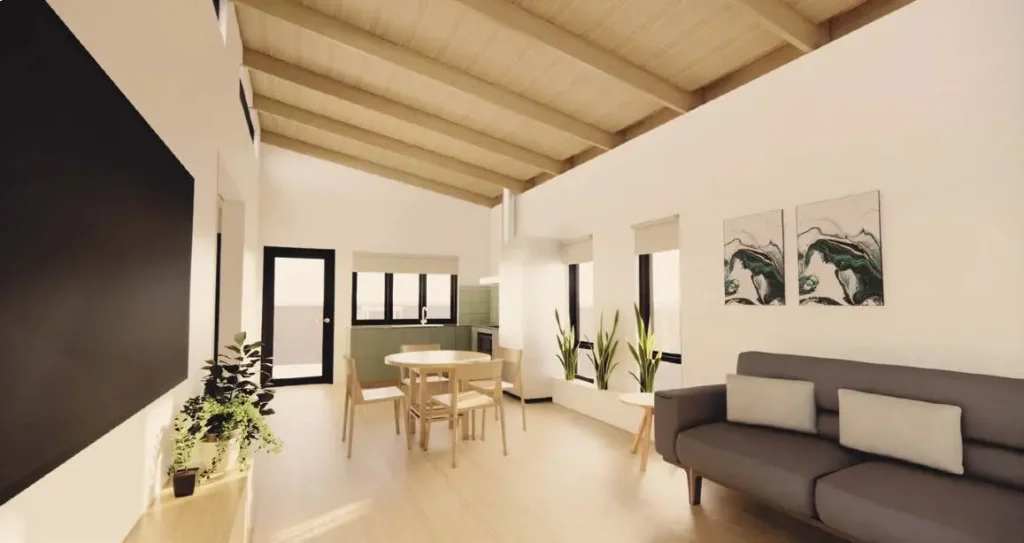
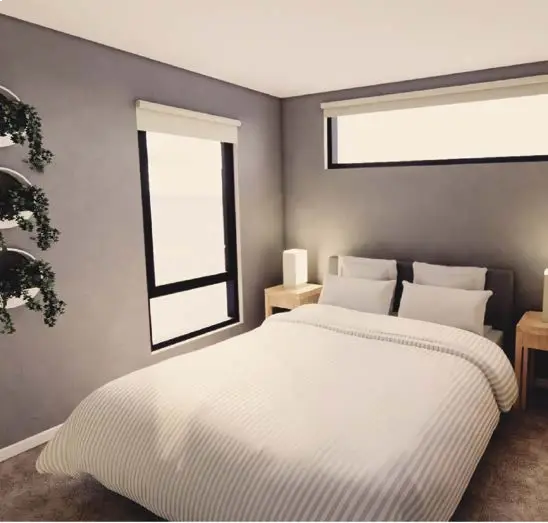
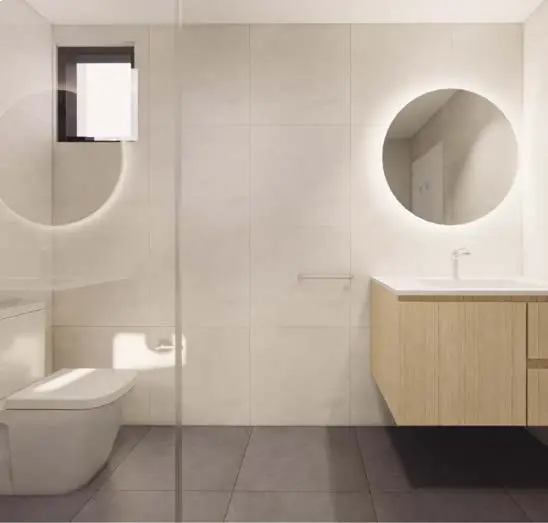
Toxin-free materials are used for all furnishings, finishes and other elements, in line with the Living Building Challenge (LBC) requirements around health and wellbeing.
Biophilic and nature-positive design is something Cummins says aligns with his background as a practising physiotherapist, and also fits in with his dedication to research.
“My professor … will always say, what does the research say? We would never touch a patient unless we know what the research says. We are not smart enough to know the answer.”
The patient-centred approach Cummins picked up from his physiotherapist training has helped in his subsequent construction career.
“It gives me such unique insight into the design and wellbeing of a patient and by having very simple leadership skills such as empathy, listening, understanding and always treating that patient in the bedroom as if they were your mum. It’s a pretty good guide help plan better construction and build better buildings.
“It’s been amazing and quite humbling to be able to teach a slower approach and patientcentred understanding to the project team.”
About the author
Willow Aliento is a journalist and editor who has been researching and writing about the built environment, engineering, sustainability, technology and construction since 2008. She is also a qualified environmental scientist with special interests in resilience, climate adaptation, social value, supply chain sustainability and nature-related impacts.
From our advertisers

Recent articles
Latest edition
See everything from the latest edition of Ecolibrium, AIRAH’s official journal.