The living laboratory

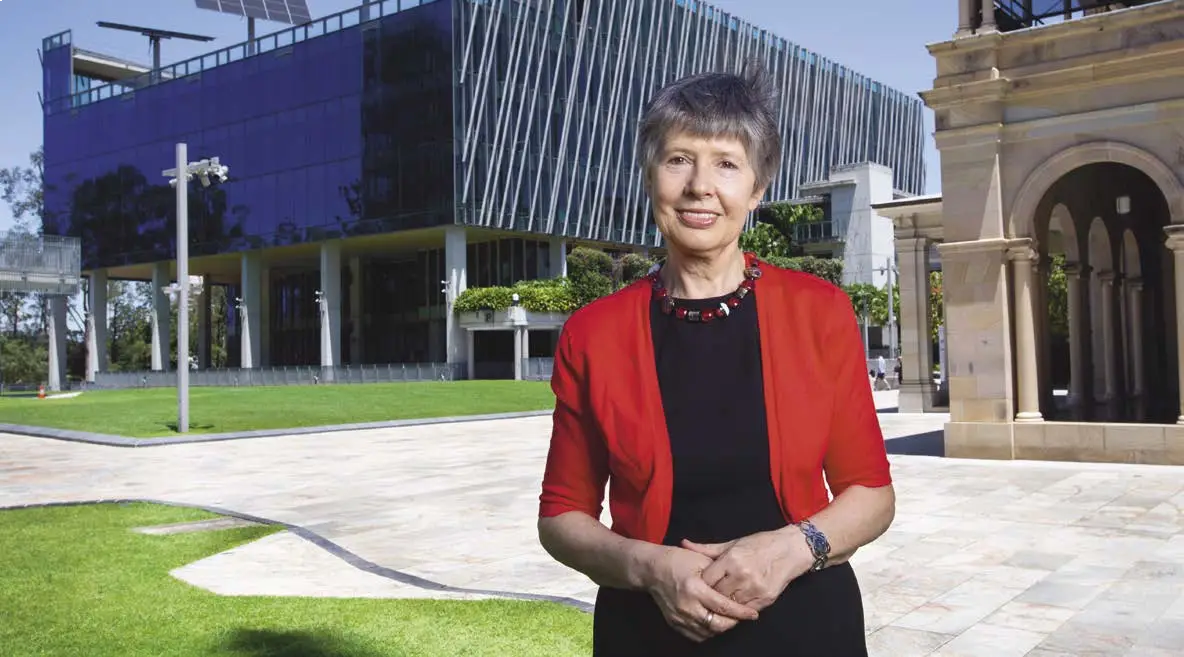
Ecolibrium speaks with Distinguished Professor Lidia Morawska about an ambitious QUT project to provide world-leading indoor air quality monitoring and control in a university building.
In December last year, Queensland University of Technology (QUT) announced that it would be embarking on a three-year, $3.4 million project to turn its Science and Engineering Building into a first-of-its-kind “living laboratory” for indoor air quality (IAQ).
Known within the Gardens Point campus as “P Block”, the 13-year-old building has a 4 star Green Star rating and is home to the Centre for Advanced Building Systems against Airborne Infection Transmission (Thrive) lab. In the coming months, the building will be equipped with over 200 low-cost sensors and monitors to keep track of IAQ in every nook and cranny, and adjust the HVAC system’s performance accordingly.
So, why is QUT turning one of its flagship buildings into an IAQ test site? We speak with Distinguished Professor Lidia Morawska to find out.
“You might wonder what the big deal is – it doesn’t sound hard to link the monitoring data to realtime control, but as we’ve found out, it’s mind-bogglingly complex.”
Lidia Morawska
Right here, right now
Professor Morawska is one of the world’s leading indoor air quality experts, with her research focusing on the intersection of IAQ and human health. She has won numerous awards over her decades-long career, including the Prime Minister’s Prize for Science in 2025, and the Eureka Prize for Infectious Diseases Research in 2018. She even made an appearance in Time magazine’s list of the world’s 100 most influential innovators in 2021.
She’s best known for her work on COVID-19; during the pandemic, she led the international, multidisciplinary team of 239 scientists that confirmed that the SARS-CoV-2 virus spreads through airborne transmission. This led to governments around the world updating their health guidelines and likely saved thousands, if not millions of lives.
When she’s not winning global awards, Professor Morawska is the Director of the International Laboratory for Air Quality and Health at QUT and the driving force behind the P Block project. She says the project aims to set a new standard for IAQ in public buildings around the world.
“So far, there’s no building in the world where air quality is not only monitored, but this information is used for controlling the quality of the air in real time,” Professor Morawska says. “There are a small number of modern buildings where there is IAQ monitoring that is likely used to identify some problems, but that information is not used for real-time control.”
Real time is the key factor here. The QUT project team will install more than 200 IAQ monitors in phases throughout the building, then have those monitors communicate with a database and the building management system (BMS). Once operational, the system will constantly monitor, update and display IAQ data, while also acting to address air quality issues as they arise. That’s more complicated than it might seem.
“You might wonder what the big deal is – it doesn’t sound hard to link the monitoring data to real-time control,” Professor Morawska says. “But as we’ve found out, it’s mind-bogglingly complex. “To do this, we need to use an AI-powered optimisation approach, which can be connected to the building management system to tell the system what to do.
“Everything has to be retrofitted such that it operates, which has never been done before.”
The first phase of those retrofits is about to get underway.
Monitoring the situation
A project like this doesn’t happen overnight; it needs to be delivered with careful consideration. For Professor Morawska and her team, that began with the selection of sensor equipment.
“The first question was to work out what monitors or sensors we’re going to use for this,” Professor Morawska says. “We already had a lot of experience in this area, but now we had to think strategically.
“We did a proper review and identified four types of monitors, which we’ve already purchased. There will then be a final decision about which monitor we’re going to use.”
Different air quality monitors measure the concentration of different pollutants. In a widely recognised study published in 2024, Professor Morawska and her colleagues identified three major air pollutants that could be effectively monitored and controlled indoors.
“In our analysis, we recommended that three pollutants be monitored: PM2.5 and carbon monoxide (CO) as pollutants in their own right, as well as carbon dioxide (CO2) as a proxy for infection transmission and ventilation,” Professor Morawska says.
“For those three pollutants, we have low-cost, robust monitoring technologies that allow us to place sensors in every space.”
There are other factors to take into account when selecting the appropriate monitors. One of these is how they are (or aren’t) wired into the building.
“The sensors are tiny, but they need to be connected to monitors,” Professor Morawska says. “The question then is whether to wire these monitors to the building’s system such that information is transmitted along wires, or choose monitors that operate via wi‑fi.
“For example there are very good, small, low‑cost monitors that are completely wireless. One of the problems is that, as they’re completely wireless, their energy is provided by batteries, which is fine if you have one or two of them. But if you have a few hundred, it’s not quite sustainable.
“That said, you can still plug them in for energy purposes but let them transmit data via wi‑fi.”
“In our analysis, we recommended that three pollutants be monitored: PM2.5 and carbon monoxide (CO) as pollutants in their own right, as well as carbon dioxide (CO2) as a proxy for infection transmission and ventilation”
Lidia Morawska
Implementing the retrofit
Professor Morawska notes that the aim of the P Block retrofit isn’t necessarily to provide the most comprehensive, high-tech monitoring that money can buy. Instead, it’s to use low‑cost monitors in an efficient layout to provide reliable results, while also remaining attainable and affordable for other building owners and managers to replicate.
This means undertaking the retrofit in phases, as would likely happen in other buildings.
“It’s not that we’re going to buy over 200 monitors and install them immediately, because that’s not how it’s going to operate in other buildings,” Professor Morawska clarifies. “We will start with level eight of the building – that’s the top of the building where our offices and labs are.”
As this part of the project gets underway, another is in the works. A comprehensive database is being designed to operate using Amazon Web Services, an easily accessible platform that other organisations could feasibly use in the future. This database will provide the crucial link between monitoring and control.
“Once we have the monitors in place reporting to the database, there will come a day hopefully around the middle of this year when we press a button, send the data to the website and it will be visible,” Professor Morawska says.
The end result will be that anyone can go to the project website and see real-time IAQ data from within the building. This is a more significant development in IAQ than it might seem.
“It’s not like it is with outdoor air, where you can click on your state agency website and you can instantly see what the air quality is like outdoors,” Professor Morawska. “Nothing like this exists indoors yet.”
Perhaps the most “sci-fi” element of the retrofit project is the building’s digital twin, which will help visualise air quality throughout the space.
“We’re also building the digital twin of the building with the sensors in place, which is almost finished,” Professor Morawska says. “You can digitally walk through the building, see where the sensors are and then link it to the database to see the concentration monitored by each sensor in that space.”
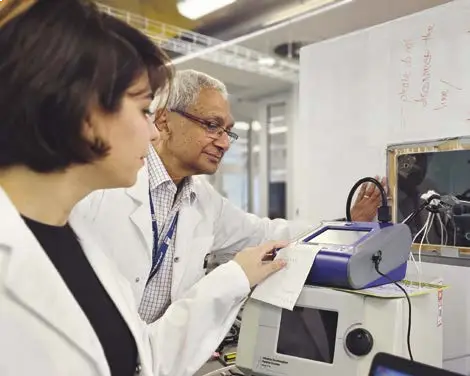
Eventually, the team aims to make real-time monitoring of IAQ available publicly.
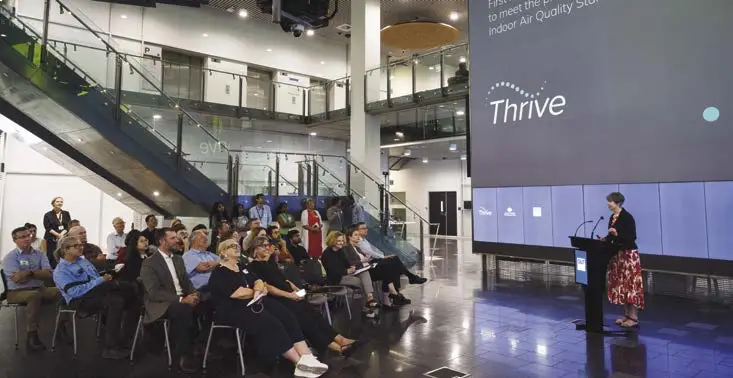
The aim of the Centre is to design and develop building systems whose elements work together to improve IAQ and at the same time maintain comfort and energy efficiency.
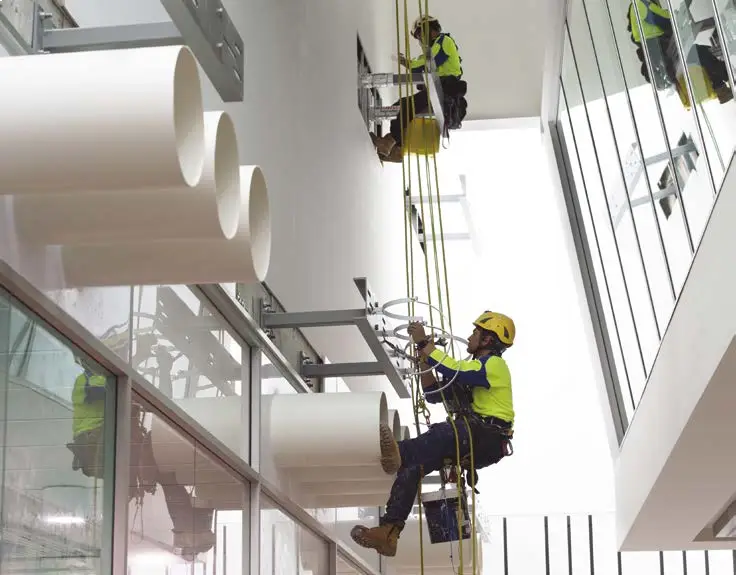
Block P works include installing low‑cost, robust monitoring technologies to track PM2.5, CO and CO2.
Finding the formula
One of the most interesting aspects of this retrofit project is that everything will be implemented transparently, with the hope that other public buildings will follow suit. Professor Morawska describes the process as a “cookbook recipe” for implementing IAQ retrofits.
“Not only will we be working in a very clean building, but it will be a demonstration for the world that something like this is possible in an existing building,” Professor Morawska says.
“Absolutely all the information about what we’ve done – why we did it, all the justifications, all the details – will be on the project’s website, including the cost. This includes the cost of sensors, monitors, retrofits, and energy use.”
There is, Professor Morawska acknowledges, an argument that this project could lead to increased energy usage, as spaces that were previously underventilated get more airflow. However, she points out that overventilation of unused spaces could come with an equal or greater energy penalty, and that this project should reduce energy use in such spaces.
She also points out that, while the team will publish as much information as possible, each building comes with its own unique challenges that will need to be taken into account in other projects.
“Even though it’s a cookbook recipe, every building is different – so if retrofitting is needed, it won’t be exactly the same as what we had to do,” Professor Morawska says. “But it will be as detailed as possible, so that operators and jurisdictions that want to embark on this will know exactly what questions to ask, what to do and what not to do based on our experience”.
Why it matters
For Professor Morawska and her team, the motivation for the project is clear, and it extends well beyond their own workplace. The theory comes from the team’s 2024 study, which calls for greater nationwide action on IAQ.
“We published a paper in 2024 that was a blueprint of how to do this,” Professor Morawska says.
“Now we are trying to convince the authorities to actually implement standards, because this is not going to happen voluntarily. It would be naive to think that it will be happily adopted across the board, because there’s an initial cost, even though it’s a small one.
“By doing this demonstration project, we’re showing that we’ve got the blueprint for the for the standard, we’ve demonstrated it’s working, and now it’s time to implement it in phases.
“This is for the public good, and public health must be regulated by the government.”
The human side of the equation provides even stronger motivation for the team. They realise that, to make truly public spaces, we need to provide air that is safe for even the most vulnerable members of society.
“It’s simple: if we remove pathogens and other pollutants from the air, we can all breathe clean air – that’s the purpose of this,” Professor Morawska says. “That’s important to all of us, but particularly people with any pre-existing conditions who could be more vulnerable than others. There are many, many Australians in this class.
“If you can breathe clean air and you don’t have to worry about pollutants in the air, then the building is accessible for you.”
Follow the project
You can follow the P Block retrofit project via the official project website
Scan the QR code to visit the website.

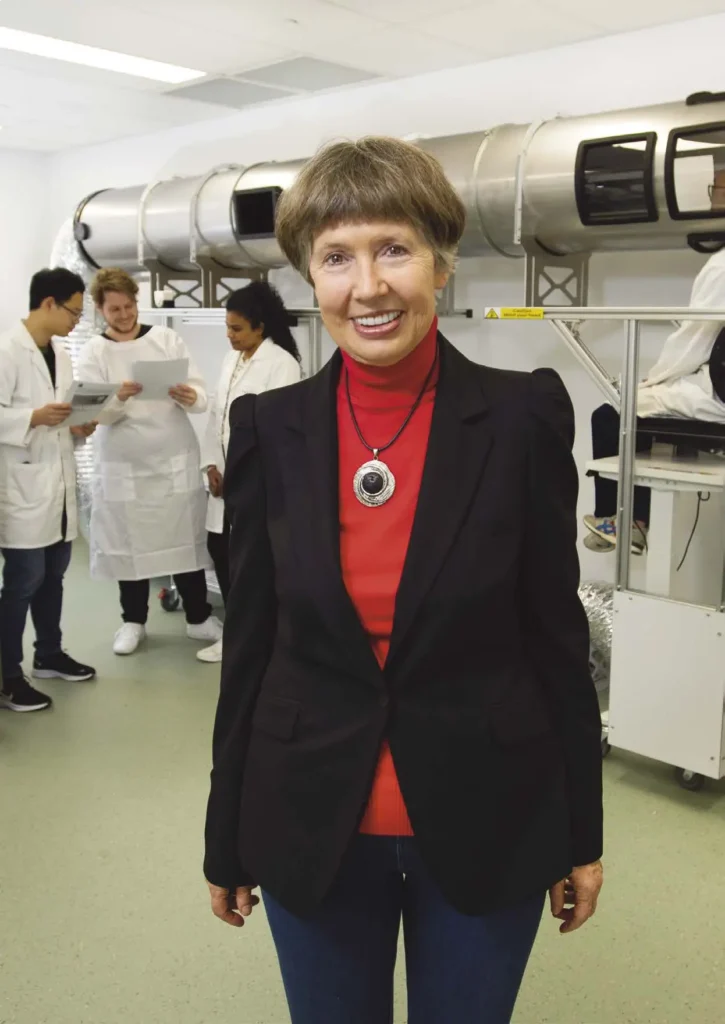
Distinguished Professor Lidia Morawska believes the living laboratory at QUT will provide valuable learnings for retrofitting other existing buildings to improve IAQ.
From our advertisers

Recent articles



Latest edition
See everything from the latest edition of Ecolibrium, AIRAH’s official journal.