The triple benefits of double-skin façades

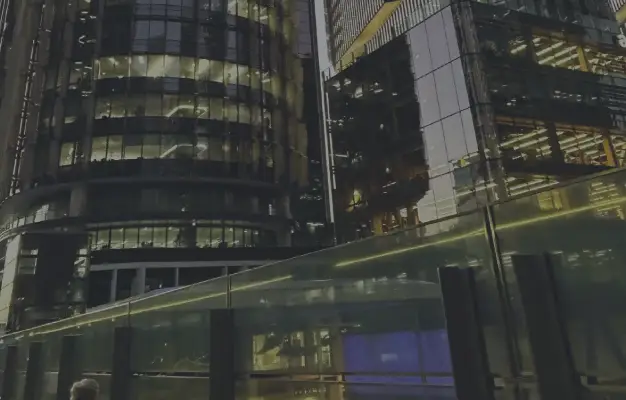
Daniel Bonatti, M.AIRAH, explains how double-skin façades can improve building performance through enhanced heat, light and acoustic management.
In the contemporary landscape of sustainable architecture and high-performance building services, the building envelope has evolved from a static barrier into a dynamic thermal and atmospheric filter. For mechanical engineers, the challenge of maintaining occupant comfort – defined by ASHRAE Standard 55 (2017) – while minimising HVAC energy consumption is increasingly met through advanced façade engineering.
This feature evaluates the use of double-skin façade (DSF) as a primary mechanism for the integrated management of heat, light, and sound. Through an analysis of technical strategies (natural, mechanical, and hybrid ventilation) and specific Australian case studies, including the University of Sydney Law School (FJMT, 2020) and the International Towers at Barangaroo, I aim to define the engineering parameters required to optimise these systems.
What is a double‑skin façade?
Let’s start off with the basics. A DSF is exactly what it sounds like – an extra layer of glazing in front of a building’s internal glazing.
In one sense, a DSF is like double-glazing on a grand scale; it’s a dual-layer façade system comprising two glass skins separated by an air cavity (WSP Global Inc, 2017). However, the key difference between DSF and double-glazing is the size of the cavity, which can be as wide as a metre in some cases – as opposed to around 5cm in double-glazing – allowing significant volumes of air to flow through it. This means the cavity can serve both as a thermal buffer and a conduit for ventilation, allowing for the convection of hot air and creating the stack effect (WSROC, 2019).
By using a secondary glazed skin and a controlled air cavity, DSFs leverage thermodynamic principles – specifically thermal buoyancy and the greenhouse effect – to reduce sensible heat gain and enhance acoustic attenuation (Loncour et al, 2003).
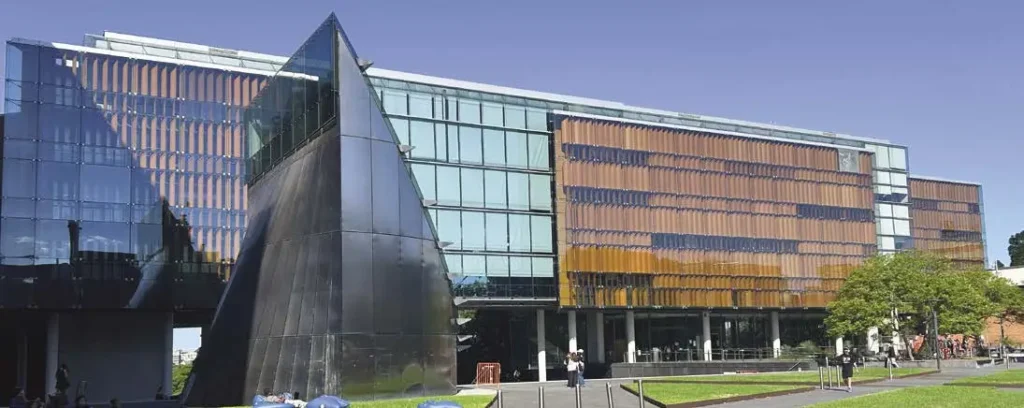
The University of Sydney Law School features a double-skinned façade.
Engineering fundamentals: heat, light and sound
People often consider façades to be decorative components of a building’s design. This couldn’t be further from the truth.
To effectively manage a building’s internal environment, HVAC engineers must treat the façade as an active component of the building’s mechanical system. This means accounting for how its design affects heat, light and sound within the building. One way to optimise performance is through a DSF (Souza, 2024).
Here’s an overview of how DSFs affect heat, light and sound in buildings.
“To effectively manage a building’s internal environment, HVAC engineers must treat the façade as an active component of the building’s mechanical system”
Heat gains and losses
The management of heat within a DSF involves three primary vectors: radiation, conduction, and convection. In the context of building science, DSFs primarily target sensible heat – the energy associated with temperature change (Ahmadi et al, 2022). By decoupling the exterior weather-facing skin from the interior thermal envelope, the system creates a buffer zone that resists heat flow (Hraška et al, 2004).
At this point, it’s worth considering two scientific concepts:
- U-value and thermal resistance: The thermal performance of a building envelope is quantified by its U‑value, which is calculated as the inverse of the total thermal resistance (R‑value) of all materials, air layers, and surface resistances in the assembly. A lower U‑value indicates better insulation performance. A DSF can reduce the effective U‑value by introducing an unheated buffer zone, which increases the overall thermal resistance, although the magnitude of this effect depends on the façade’s design and ventilation strategy (Yu et al, 2024).
- Thermal buoyancy: The “stack effect” or “chimney effect” is the engine of a passive DSF. As solar radiation enters the cavity, it is absorbed by the internal skin or shading devices, heating the air within. This reduces the air’s density, causing it to rise and draw cooler air from the base, effectively removing heat before it penetrates the primary building envelope (Schittich, 2007)
“In façade engineering, the greenhouse effect is a controlled mechanism that can be advantageous.”
Luminous efficacy and daylight integration
For engineers, lighting is not merely an aesthetic choice but a major source of internal heat gain. Artificial lighting is necessary in all buildings, but it accounts for a significant portion of a building’s electrical load and sensible heat (Todhunter, 2020).
For this reason, designers typically emphasise natural daylighting (measured in lux) wherever possible. DSFs use high-transparency glazing to maximise natural light.
Of course, this presents a challenge of its own: the more natural light that enters the building, the greater the heat gain will be. This is where solar heat gain coefficient (SHGC) comes in. The SHGC is a number between 0 and 1 expressing how much solar heat radiation passes through the building’s windows (Mannlee, 2025).
There is no single optimal SHGC – it all depends on location, orientation and season. In a cold climate during winter, an SHGC close to 1 can help heat the building passively. In a warmer climate or during the summer months, keeping the SHGC closer to 0 can reduce cooling costs (Optimal Windows, 2025).
One way to balance visible light transmittance with the SHGC is to integrate adjustable louvres within the DSF cavity. This allows for the dynamic modulation of light, preventing glare and excessive solar gain while maintaining 360-degree views – a factor shown to increase occupant productivity and wellbeing (Archello, 2023).
Acoustic attenuation
In urban environments, such as the Sydney CBD, external noise pollution (measured in decibels) is a critical design constraint. The air cavity in a DSF acts as a physical buffer, dramatically reducing noise pollution. The sound waves must pass through multiple layers of glass and a medium of air with varying densities, which significantly increases the sound transmission class (STC) rating of the wall assembly compared to a single-skin system (Hu et al, 2020).
Reclaiming the greenhouse effect
We’re used to discussing the greenhouse effect in the negative context of global warming. However, in façade engineering, the greenhouse effect is a controlled mechanism that can be advantageous.
When solar radiation hits the outer glass, the heat is trapped in the cavity. Because air has a specific viscosity and thermal capacity, engineers can manipulate its flow to either retain heat (winter mode) or exhaust it (summer mode).
Louvres and shakers
One distinct advantage of a DSF is the ability to place shading devices, such as automated louvres, inside the protected cavity. This makes sense from a thermal perspective, as we touched on earlier, but there are two other significant advantages to this approach (Roberts & Guariento, 2009; Schittich, 2007).
- Mechanical protection: Unlike external louvres, these are protected from wind loads and weathering, significantly reducing maintenance costs.
- Heat removal: When louvres absorb solar energy, they become “radiators” within the cavity. In a well-engineered DSF, the rising air in the cavity carries this absorbed heat away via the stack effect before it can be conducted through the inner glass pane into the office space.
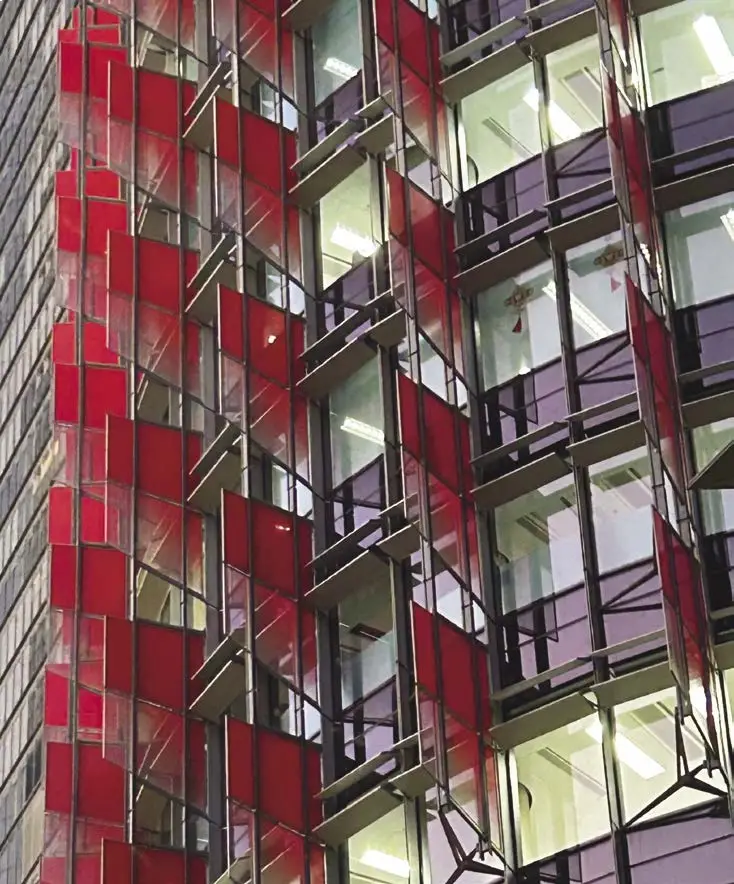
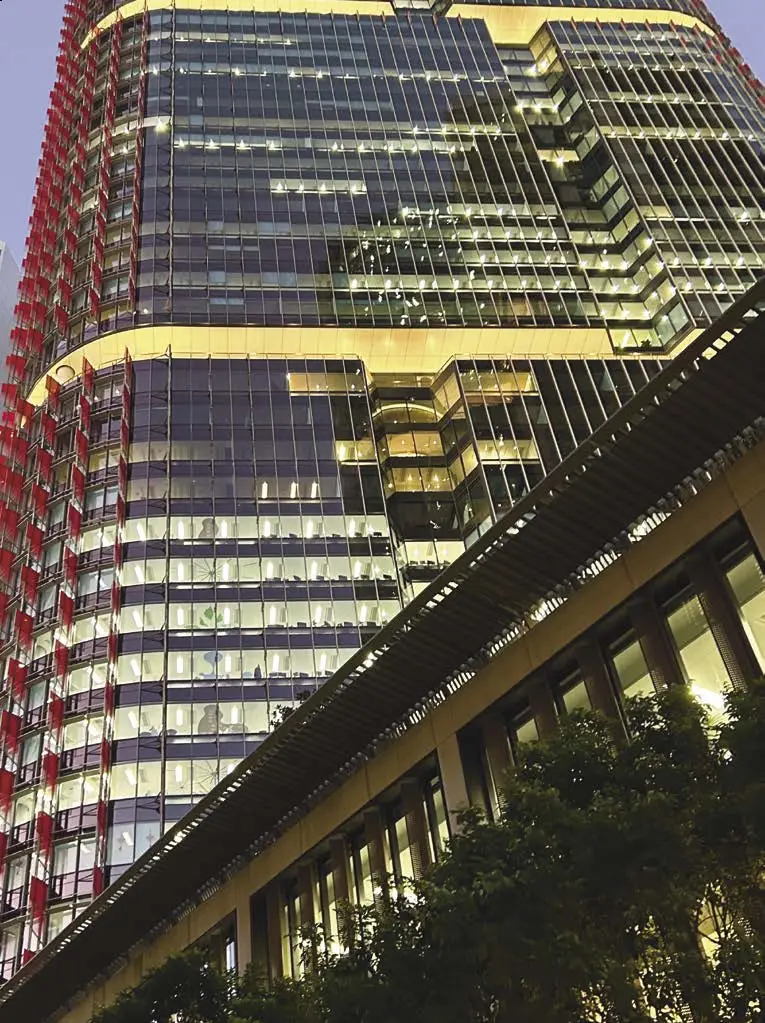
At Barangaroo, the location, alignment and size of shading on each façade was adjusted based on heat load analysis.
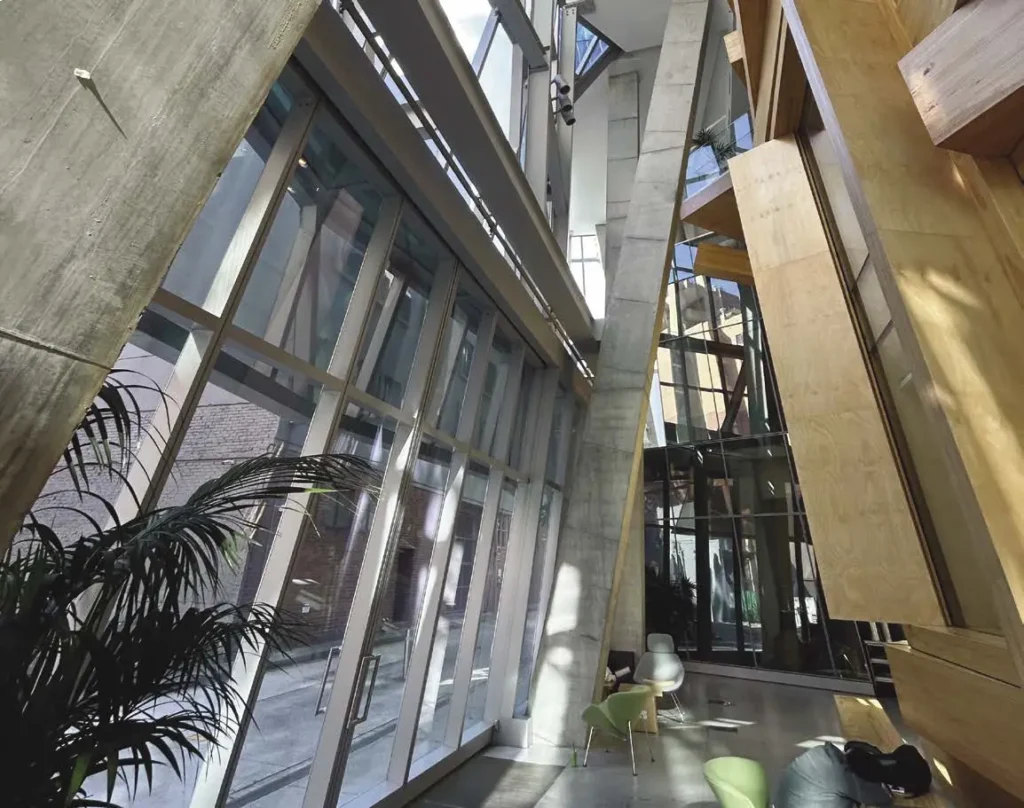
Façades play a vital role in permitting natural light to enter a building, but also moderating solar heat gain.
Target performance metrics
According to the Chartered Institute of Building Services Engineers (CIBSE), the optimal indoor operative temperature should be maintained between 19°C and 23°C in winter and should not exceed 27°C in summer. High-performance DSFs aim for a “steady state” where internal temperature fluctuations do not exceed 3°C, significantly reducing the cycling load on air handling units (AHUs) within the building’s mechanical ventilation system (CIBSE, 2015).
DSFs for ventilation
The “intelligence” of a DSF lies in how the air cavity is ventilated using basic thermodynamic principles. This allows the building to ventilate naturally when conditions are right, with the option to heat or cool using the mechanical HVAC system where required (Wong, 2008).
Natural ventilation (the passive strategy)
Natural ventilation within a DSF relies entirely on thermal buoyancy and pressure differentials. Cool air enters at the base of the cavity, where it is heated by solar gain, before buoyancy forces it out through top-level dampers.
This strategy is brilliant … when it works. Passive ventilation is highly dependent on ambient external temperatures and wind pressure. It is most effective in temperate climates or during shoulder seasons; extreme heat, cold, humidity or aridity might require intervention from the mechanical HVAC system (Zin et al, 2020).
Mechanical and hybrid ventilation
In extreme climates, natural buoyancy may be insufficient to remove the heat load. In this situation, a little support from the mechanical HVAC system can “fake” the natural effect of the DSF, helping it optimise temperatures even when conditions aren’t perfect
Fans or AHUs can be used to force air through the cavity. In summer, this air is exhausted; in winter, the warmed cavity air can be recovered and filtered into the building’s main supply air stream to reduce
the heating load (Schittich, 2007).
In most cases, a hybrid approach works best. This type of system uses sensors to toggle between natural and mechanical modes. When the temperature differential is high enough, the system operates passively. When the cavity stagnates, fans engage to maintain the thermal buffer.
An electrifying development
What’s better than a façade that helps heat, cool, light and ventilate its building? One that also generates its own electricity!
The latest development in DSF design involves integrating photovoltaic (PV) cells into the internal glazed skin of the façade (Roberts & Guariento, 2009; Yudelson, 2009). Research from the University of Barcelona and the University of Stuttgart shows that integrating PV cells into a DSF can significantly improve overall system performance. Depending on the configuration, studies report increases in solar energy utilisation of up to around 60%, due to reduced PV overheating and improved façade energy behaviour.
Why? Because PV cells lose efficiency as they heat up. Placing them inside a ventilated doubleskin façade helps mitigate this. Airflow through the cavity created by the stack effect cools the PV modules, reducing their operating temperature and helping maintain electrical output (Roberts &
Guariento 2009; Schittich, C. 2007). The outer glazing still allows most of the solar radiation to reach the PV cells, while moderating heat buildup compared to fully exposed installations.
Another benefit is heat recovery. In winter, the heat generated by the PV cells can be harvested from the cavity and used to pre-heat the building’s intake air, significantly reducing the load on heating coils in the AHUs.
Engineering theory in practice
We’ve covered the theory of DSFs – now it’s time for the fun part: real-world examples! The following case studies illustrate how thermodynamic theory and structural reality intersect in the Australian built environment. We’ll start with an example of a classic DSF as we’ve explained it above, then move onto some interesting alternatives that use similar approaches.
University of Sydney Law School
The University of Sydney’s new law school building is a great example of a high‑performance DSF designed for a temperate, urban climate. The building uses a classic DSF arrangement: two glass walls separated by a cavity containing automated timber louvres.
- Operational logic: The cavity acts as a “solar chimney.” During high-insolation periods, the louvres absorb radiant energy. This creates a temperature gradient within the cavity, driving the air upward and exhausting it at the roofline.
- HVAC load reduction: By intercepting heat before it reaches the internal thermal envelope, the building reduces its reliance on active chiller systems. The system effectively functions as “natural air conditioning”, maintaining a relatively stable internal temperature (Sung & Kim, 2019).
- Acoustic management: Facing the high‑traffic City Road, the DSF’s properties as an acoustic isolator are extremely useful. The 600–1,000mm cavity combined with the dual glazing layers provides a significant reduction in decibel levels. DSFs like this one are well documented to improve indoor acoustic comfort and support achieving typical study space targets of around 40–45dB(A) (Chiang et al, 2004).
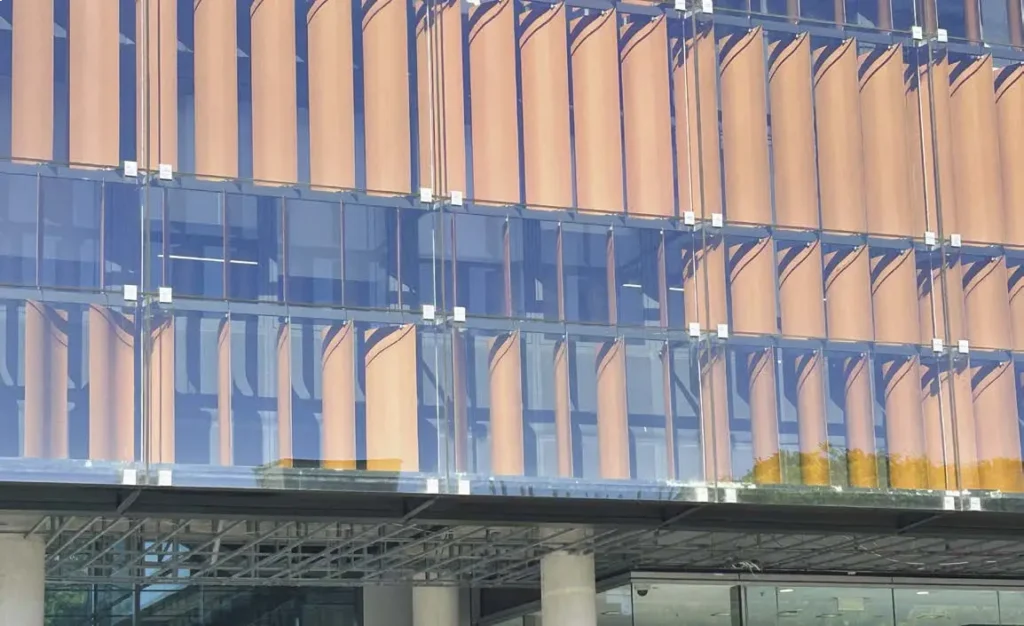
The louvres in the DSF at the University of Sydney Law Building absorb radiant energy, reducing the cooling load on the building’s HVAC system
A legal precedent
A critical lesson learned from the University of Sydney case study arises from the building’s glass bridge. In this section, the internal thermal skin was omitted for aesthetic reasons, leaving only a single glazed layer. Without the secondary skin, the “greenhouse” heat trapped in the glass-enclosed space had no buffer and the stack effect was broken.
The result? In the dean’s office and upper levels of the bridge, the heat gain became unbearable for occupants. The lack of a thermal buffer necessitated the retrofitting of traditional, energy-intensive HVAC units to compensate for the failed passive design. This highlights that for a DSF to function, the integrity of the dual-skin cavity is non‑negotiable.
Within the building, the underground Herbert Smith Freehills Library demonstrates the application of the chimney effect in a “top‑down” configuration. A 20m light lantern penetrates the subterranean levels.
Triple-glazing is used to ensure high thermal resistance while allowing daylight to penetrate deep into the library. The lantern also acts as a thermal exhaust for stale air from the lower levels, using the pressure differential between the underground space and the atmospheric pressure at the surface to facilitate air exchange.
“When you examine double‑skinned façades in detail, one thing becomes abundantly clear: the building envelope must be treated as a dynamic mechanical component rather than a static architectural element.”
Australian Islamic Centre
While not a traditional DSF, this case study is vital for understanding the luminous and thermal management of roof-based apertures. Designed by renowned architect Glenn Murcutt AO, the Australian Islamic Centre in the Melbourne suburb of Newport uses 96 gold-anodised lanterns on the ceiling for both aesthetic and practical reasons.
Each lantern is designed to capture daylight at specific angles corresponding to the sun’s position. The coloured glass in these lanterns (yellow for morning, green/blue for midday, red for afternoon) is a nod to the classic dome and stained glass that are features of more traditional mosques.
These lanterns also serve as micro-solar chimneys, facilitating natural convection by drawing hot air upward and out of the high occupancy prayer hall. This is essential during peak religious gatherings when latent heat from occupants is high.
International Towers, Barangaroo
The International Towers in Barangaroo represent an interesting alternative perspective on façade engineering: a high-performance single skin with external shading.
A major consideration in this project was the “urban heat island” effect, where the surrounding metropolis and asphalt increase the ambient air temperature. The designers attempted to minimise this effect with the environmental siting of the building and selecting glazing for the building’s skin as a climate responsive design. They also opted for a sophisticated single-skin approach rather than a DSF to manage costs and maximise floor-plate efficiency (Anitha, 2026).
- Fixed external shading: The International Towers use fixed external fins and canopies that are mathematically modelled to block high-angle summer sun while allowing low‑angle winter sun to provide passive heating
- Variable specification: Each pane of glass in the building was individually specified based on its orientation (north, south, east, west) and the shadowing effects of neighbouring towers
- Mechanical integration: The result is a façade that achieves 6 star Green Star status. By reducing the peak solar load through shading, the size of the required HVAC plant (chillers, AHUs, and ductwork) was significantly downsized, saving both capital and operational expenditure.
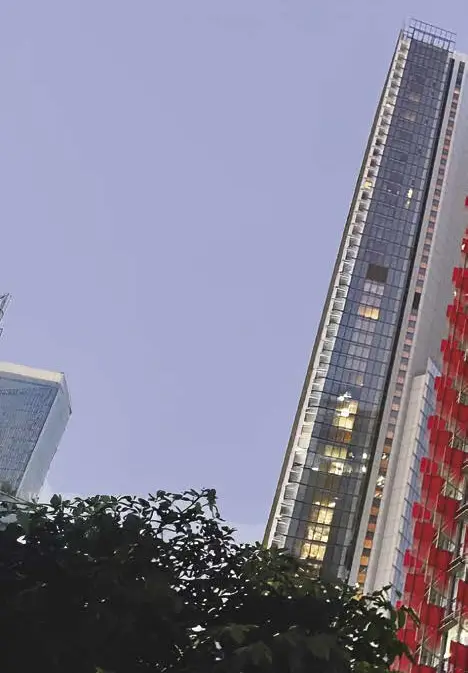
Although not a DSF, the facades at Barangaroo International Towers reflect a considered design approach, including individually specifying panes of glass based on their orientation
UTS Business School (Dr Chau Chak Wing Building)
Frank Gehry’s “Brown Paper Bag” building provides a unique study of thermal mass versus glazed façades.
The undulating brick façade serves as a high-mass skin. Unlike glass, which has low thermal inertia, the brick absorbs solar radiation and slowly releases it, a process known as thermal lag. And while it doesn’t look anything like the classic DSF you’d see on the University of Sydney Law Building, it uses some of the same principles; behind the brick façade lies a metal-clad inner wall.
The cavity between the brick and the metal serves as a drainage and moisture-management zone. While its primary purpose is not thermal ventilation, the air gap provides additional insulation that helps stabilise the interior temperature.
On the opposite side of the building, a curtain wall reflects the city. This side requires operational sunshades and high-efficiency lighting to compensate for the lack of thermal mass, creating a hybrid mechanical challenge for the building’s HVAC zone management (Gehry, 2014).
Moving forward
When you examine DFSs in detail, one thing becomes abundantly clear: the building envelope must be treated as a dynamic mechanical component rather than a static architectural element. For the HVAC engineer, the primary lesson is the necessity of system integrity. As seen in the University of Sydney Law School case study, the failure to maintain the secondary thermal skin in the “glass bridge” transition completely bypassed the passive stack effect, forcing a reliance on reactive mechanical cooling.
Furthermore, the integration of heat, light, and sound management requires a holistic approach:
- Heat: The “solar chimney” effect is a robust, low-tech solution for sensible heat removal, provided the cavity width and damper controls are optimised for thermal buoyancy.
- Light: Effective daylighting is not just about lux levels; it’s about mitigating the solar heat gain coefficient through internal cavity louvres that protect the building without obstructing vistas.
- Sound: The acoustic benefits of the DSF air gap are a high-value byproduct in urban environments, often negating the need for specialised acoustic glazing (WSU 2020).
As the industry pivots toward net zero emissions and Green Star certifications, the DSF stands out as a critical innovation. While single-skin façades with advanced coatings (as seen in Barangaroo) offer a cost-effective alternative, the DSF provides superior longterm resilience by facilitating passive solar design and hybrid ventilation.
“As theindustry pivots toward net zero emissions and Green Star certifications, the DSF stands out as a critical innovation.”
References
Ahmadi, J., Mahdavinejad, M., Larsen, O. K., Zhang, C., Zarkesh, A., & Asadi, S. (2022). Evaluating the different boundary conditions to simulate airflow and heat transfer in double‑skin façade. Building Simulation, 15, 799–815. https://doi.org/10.1007/s12273-021-0824-5
Anitha, V. (2026). Understanding urban heat islands: Definition, causes, and effects. In Remote sensing of urban heat islands (pp. 1–7). Springer Nature. Archello. (2023). 10 office buildings with insulated double‑skin facades. https://archello.com/news/10-office-buildings-with-insulated-double-skin-facades ASHRAE Standard 55 – 2017
Chartered Institution of Building Services Engineers. (2015). CIBSE Top Tips 8: Temperature in indoor workplaces (Thermal comfort).
Chiang, W., Chao, Y. & Wu, C. (2004). Sound insulation of double skin façade. https://www.ncree.org/2004tcworkshop/pdf/16.pdf?utm_source=copilot.com
Hraška, J., Janák, M., Rabenseifer, R., & Strigner, R. (2004). Double skin façades: Two case studies. Slovak University of Technology. https://www.irbnet.de/daten/iconda/CIB2404.pdf
Hu, Z., Maxit, L., & Cheng, L. (2020). Acoustic design and analyses of a double skin façade system. Applied Acoustics, 170, 107727.
Loncour, X., Deneyer, A., Blasco, M., Flamant, G., & Wouters, P. (2003). Ventilated double skin façades: Classification & illustration of façade concepts. Belgian Building Research Institute. https://www.aivc.org/sites/default/files/members_area/medias/pdf/CR/CR03_Ventilated_Double_Facades.pdf
Mannlee. (2025). What is solar heat gain coefficient (SHGC)? https://www.mannleecw.com/solar-heatgain-coefficient-shgc/
Roberts, S., & Guariento, N. (2009). Building integrated photovoltaics: a handbook. DE GRUYTER.
Schittich, C. (Ed.). (2007). Double‑skin façades. In Building skins (pp. 190–213). Birkhäuser. https://link.springer.com/content/pdf/10.1007/978-3-0346-0486-4_9.pdf
Souza, E. (2024). How do double‑skin façades work? ArchDaily. https://www.archdaily.com/922897/howdo-double-skin-facades-work
Sung, U., & Kim, S.‑H. (2019). A study on the improvement of double‑skin façade operation for reducing heating load in winter. Sustainability, 11(22), 6238. https://doi.org/10.3390/su11226238
Todhunter, A. (2020). Management and control of heat in buildings. Module 10 Control of heat in Buildings, VUWS.
Wong, P. C. J. (2008). Natural ventilation in double‑skin façade design for office buildings in hot and humid climate (Doctoral dissertation, University of New South Wales). https://doi.org/10.26190/unsworks/18713
WSP Global Inc. (2017). Peter Shergold Building (!PSQ) retrieved from https://www.wsp.com/en-AU/projects/1psq
WSROC, (2019). Turn down the heat Strategy, Western Sydney Regional Organisation of Councils.
Yu, J., Dong, Y., Wang, T., Chang, W., & Park, J. (2024). U‑values for building envelopes of different materials: A review. Buildings, 14(8), 2434. https://doi.org/10.3390/buildings14082434
Yudelson, J. (2009). “Green building through integrated design.” (No Title).
(Zin, M. H. M., Jamil, M., Ibrahim, N. L. N., & Tazilan, A. S. M. (2020). Passive double skin façade (DSF): Basic components and functions. International Journal of Engineering & Advanced Technology, 9(3), 513–520).
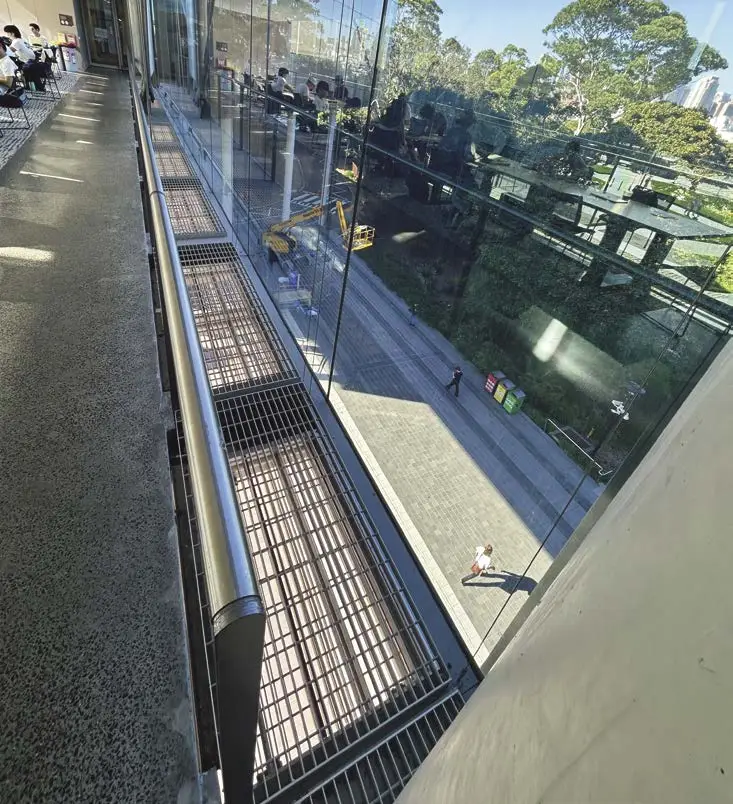
A closer view of the DFS at the University of Sydney Law Building.
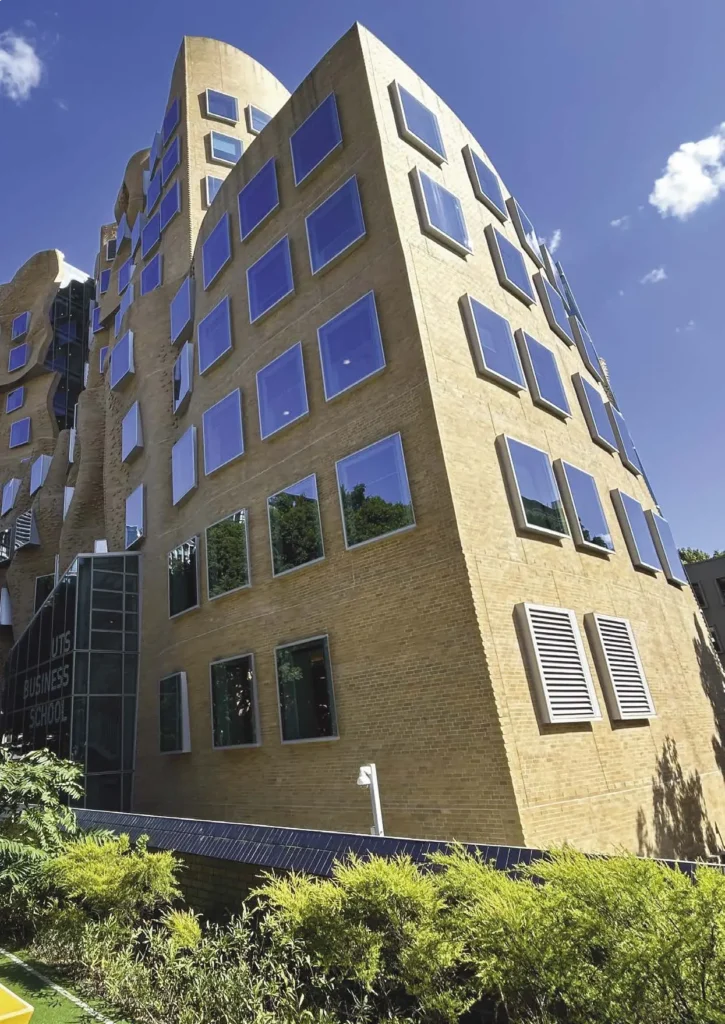
Although not a classic DSF as seen in other examples, the brick façade and metal-clad inner wall at the Frank Gehry-designed UTS Business School helps moderate temperatures inside the building.
About the author
Daniel Bonatti, M.AIRAH, has been a member of the Institute since 2004 and was recently recognised
with his 20-year membership certificate. He graduated from the University of Sydney with a Master of
Design Science Building Services in 2005. Daniel has been a building inspector since 2016, upgrading
with a Master of Building Surveying from Western Sydney University in 2024. In 2023, he won the
Engineering Technologist of the Year award from Engineers Australia. He is currently undertaking a
Doctor of Philosophy in Engineering at Western Sydney University
From our advertisers

Recent articles



Latest edition
See everything from the latest edition of Ecolibrium, AIRAH’s official journal.