Women in HVAC&R – progress or slowgress?
Gender balance and diversity remain a work in progress in HVAC&R, as a new report from Engineers Australia and WSP shows.
Released to coincide with International Women in Engineering Day on June 23, the report reveals that gender imbalance remains problematic. In particular, female representation drops sharply through the middle career years, declining at around one percentage point annually.
Given the sector’s ongoing skills shortage, this loss of experienced talent is a major productivity loss.
“Progress has been made in recent years to improve the gender share across key sectors. This is resulting in greater diversity across engineering and means efforts to encourage more girls to pursue STEM and engineering degrees are working,” Engineers Australia CEO, Romilly Madew says.
“But many longstanding barriers persist which undermines these efforts. One of the challenges our research uncovered was that engineers can experience a fundamental shift when choosing a pathway out of field-based work, which many women choose to do after returning from parental leave.
“This raised questions about how employers can support middle career engineers to successfully and intentionally navigate this crossroad and transformation.”
The data shows:
- Mid-career slump: From a peak of 64% for Australian born (and 53% for overseas born) female engineers in their mid-30s, utilisation declines by about one percent per annum.
- Workforce composition: 75% of Australia’s female engineers were born overseas.
- Sustained growth: The number of female engineers doubled in many industry sectors in the decade to 2021. This includes Professional Scientific and Technical Services, which employs more than a third of female engineers.
- Representation imbalance: The gender share of engineers in Professional Scientific and Technical Services is 15.7%, compared with 19% of engineers in the education sector, and 10% in construction.
- Pay gap persists: Based on WGEA data, the gender pay gap in Professional Scientific and Technical Services is five percentage points higher than the all-sector average of 11.2%.
Read more and access the report here.
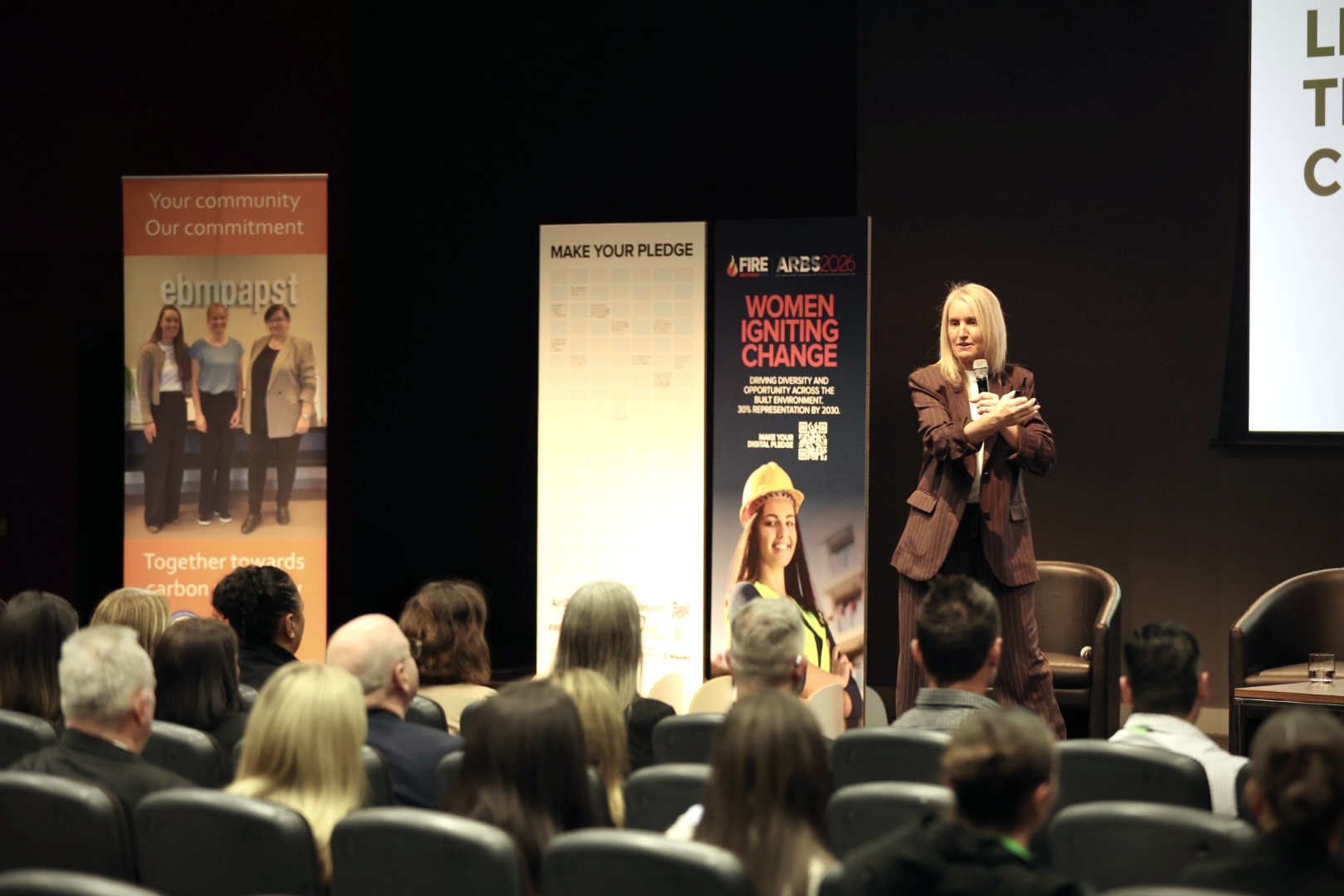
Group General Manager of SP&R Group Pam Rogers, M.AIRAH, was a speaker at the Women Igniting Change event during ARBS 2026, and one of the strongest messages she took away was that meaningful change doesn’t happen through good intentions alone.
It happens when organisations deliberately create opportunities for women to develop, lead and be heard, she says.
“The discussion reinforced that diversity isn’t just about representation. It’s about ensuring people feel they belong, have equal access to opportunities, and are judged on their capability and contribution,” Rogers explains.
“I was also encouraged by the openness of the conversation. There was a genuine willingness from both women and men to discuss the barriers that still exist and, more importantly, what practical actions we can take to remove them.”
Progress is everyone’s responsibility, she says. Creating a more inclusive industry benefits businesses, clients and ultimately strengthens the future workforce.
One of the most noticeable shifts she’s observed is there are more women stepping into leadership, technical and operational roles that historically have been male dominated.
“That’s important because visibility matters. When people can see someone like themselves succeeding, it helps break down assumptions about what is possible,” Rogers says.
“I’ve also seen a greater willingness from businesses to invest in mentoring, leadership development and more flexible ways of working. Conversations around diversity and inclusion are becoming more practical and action-oriented rather than simply aspirational.
“Perhaps most encouraging is that the industry is recognising the value that diverse perspectives bring to problem-solving, innovation and business performance. Diversity is increasingly being viewed as a commercial advantage as well as the right thing to do.”
However, Rogers observes that attracting and retaining women into technical trades and senior leadership remains a challenge.
“One issue is still awareness. Many young women simply aren’t exposed to the wide range of careers available within HVAC&R. We need to do a better job of showcasing the industry and demonstrating that there are rewarding career pathways beyond traditional perceptions.
“Retention is another focus area. It’s not enough to recruit talented women, we need workplaces where people feel supported, respected and have opportunities to grow throughout their careers. Culture, mentoring and visible leadership all play an important role.
“Ultimately, success won’t be measured by how many conversations we have, but by the number of women who choose to join the industry, stay, and progress into leadership positions.”
Rogers was also a panellist for the Women at the Coalface panel at ARBS, which provided an honest discussion about the experiences of women working across the HVAC&R industry.
“It was encouraging to hear real stories, practical insights and different perspectives from women at various stages of their careers,” Rogers says.
“I also found Leading the Change – Organisations Advancing Women in HVAC&R particularly valuable because it shifted the conversation from why diversity matters to how organisations can create meaningful change.
“Hearing businesses share practical initiatives, lessons learned, and successful approaches demonstrated that improving diversity and inclusion requires deliberate leadership and sustained commitment.”
Women of AIRAH STG
Rogers says the Women of AIRAH STG is about bringing together like-minded women from across every part of the HVAC&R industry, people working in trades, operations, administration, leadership and technical roles.
“Our focus is on identifying practical ways we can make a meaningful impact. That includes supporting and delivering industry events, developing initiatives to engage schools and encourage more young people to consider careers in our industry, promoting opportunities within the trades, and creating pathways that help attract and retain more women.
“Equally important is providing a community where women feel they belong. Having a network where people can connect, share experiences, learn from one another and build professional relationships is incredibly valuable. It creates a sense of support while also helping individuals grow in confidence and leadership.”
This article appears in Ecolibrium’s Winter 2026 edition
View the archive of previous editions
From our advertisers
Recent articles



Latest edition
See everything from the latest edition of Ecolibrium, AIRAH’s official journal.