Tackling performance for the 90 percent

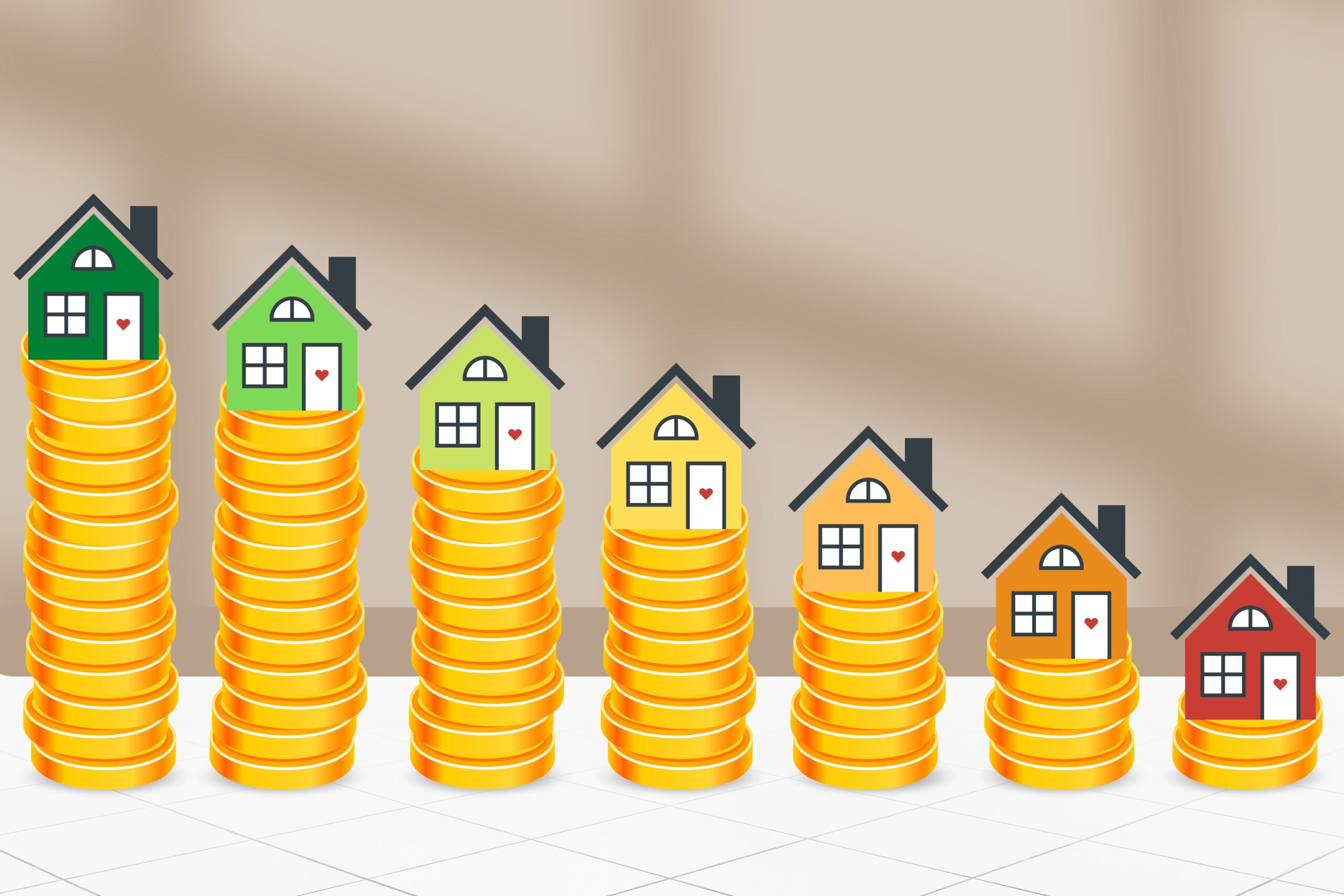
Research has delivered abundant evidence the energy and thermal comfort performance of much of Australia’s existing housing is woeful. Changing this starts now, with the full public release of NatHERS for existing homes.
For new housing, the use of the National Home Energy Rating System (NatHERS) to target and verify energy and thermal performance is baked into the National Construction Code as a requirement. However, the roughly 90 percent of housing that predates minimum energy standards has missed out.
The backstory
The launch of NatHERS for existing homes by the Commonwealth Department of Climate Change, Energy, the Environment and Water (DCCEEW) addresses some of the key recommendations experts have been making.
It was first trialled in partnership with CSIRO and four major banks from 2024 to early 2026, with more than 1,000 free home energy rating assessments delivered across a wide range of climate zones and existing dwelling types.
The Energy Efficiency Council worked with the NatHERS team to undertake some demonstrations for people to enable them to see the process.
EEC Senior Advisor, Policy and Research, Rob McLeod says feedback from the pilot was really positive.
“There’s no substitute for seeing it happen in person,” he says. “You get that really clear, practical advice from the process.”
How it works
Now out in the market, the tool provides a means to assess and report the energy efficiency of an existing home while also identifying opportunities for improvement that deliver both bill savings and thermal comfort.
It has two components: a thermal performance rating similar to NatHERS for new homes that gives a rating between zero and 10 based on passive factors such as building fabric and orientation.
The second component is the whole home energy rating, similar to requirements for new homes in NCC 2025, which benchmarks the energy efficiency of the entire home including fixed appliances such as hot water, heating and cooling, solar and batteries.
How this changes the property game
McLeod says this is an “exciting and important moment” for the Australian built environment.
“It is the building block for big wins,” he explains.
The EEC has been among the advocates pushing for people who are buying or renting a home to have the information of energy performance disclosed. After all, consumers get this information when they purchase an appliance like a fridge.
In the case of these and other appliances, disclosing energy performance ratings is mandatory, whereas in housing, they aren’t.
“The ratings are a pathway to get there for governments to bring in mandatory disclosure,” McLeod says.
“The reality is that without the right policy settings and the right building blocks, it hasn’t been possible at scale.
“Having a rating system that is consistent is a game-changer for mandatory disclosure, particularly for rentals.”
McLeod believes the ratings may also be useful for financing, so loan providers can reward better performing homes.
He says there is already evidence of the system working in other locations. In many parts of Europe, for example, people are given information about the homes they buy or rent. This can then make a difference in their decision-making.
For ratings to also deliver improvements in existing homes, McLeod says the process should go alongside giving occupants or owners information about what steps they can take to improve comfort and energy efficiency.
That translates into a need for boosting the trained workforce who can deliver the ratings, advise on improvements and those who can deliver the practical works such as draught sealing, heat pump hot water systems, glazing upgrades, insulation, shading, fans and split systems.
There is also a significant opportunity for the real estate sector, McLeod says.
“We know real estate agents have a really important role (already), so providing the ratings could be a value-add for their services. The canny real estates will be pursuing that.”
Closing the comfort gap
Real estates can help ensure homes are healthy, and meeting standards for energy performance and liveability, McLeod says.
“We know the liveability and energy performance of rental homes in Australia lags behind owner-occupied homes – we have the data.”
Enforcing clear minimum standards is likely to be required to close that gap. In the ACT and Victoria, where minimum rental standards now specify insulation, McLeod says it is a good example of industry and government working together to implement regulation.
Effective training for installers was put in place, and there is support for people to “do good, quality work safely”.
“It all can happen all at once and can be a really positive story,” McLeod says.
The shift towards lifting the standard of existing homes needs to be seen as an economic opportunity.
“One of the great things about improving energy efficiency is it is a win, win, win,” McLeod says.
“It means reduced energy costs reduced emissions and more opportunities for people working in the sector to do the thermal upgrades, appliance upgrades, batteries and so forth … these are goods jobs that we should be pursuing.”
The government has launched a dedicated website, Home Energy Ratings, which provides resources and information for assessors, homeowners, renters, banks, real estate agents and other stakeholders.
Assessor training and accreditation is also now open for anyone interested in becoming an assessor, enabling the workforce to grow and make assessments more available across Australia.
Access the portal and resources here: https://www.homeenergyrating.gov.au/

The design expert weighs in
David Mahony, Director and Head of Better Buildings (ESD) at HIP V. HYPE tells Ecolibirum the ratings will support positive change.
“(It is) similar to what made NABERS effective for commercial buildings,” Mahony says.
“You can’t manage, or price, what you can’t measure. The existing housing stock is currently an information vacuum, and a tool like NatHERS for existing homes can help to start closing that gap.”
He identifies several ways the availability of benchmarking then translates into improvements, including the all-important price signal.
“Once ratings are visible at point of sale or lease, we may start to see that efficient homes demand a premium while inefficient ones attract a discount,” he says.
This could help turn retrofit into an investment decision with a visible return, not only through focusing on aesthetic features such as a marble benchtop but also the “invisible” improvements such as insulation in a roof or wall cavity.
Mahony suggests that the government’s partnership with major banks during the Phase One trial suggests that there may be a move towards “green” mortgage products.
“And potentially risk-adjusted insurance given the possible links to climate change resilience. This creates a second capital-market pathway, independent of sale price.”
There is also a policy leverage aspect, he observes.
“A national, comparable metric makes it possible to embed performance into incentive schemes, mandatory disclosure regulation, or building-related tax and rebate settings, which is a far stronger lever than voluntary comfort or energy-bill arguments alone.”
- Read the rest of what Mahony had to say at the HVAC&R News website.

This article appears in Ecolibrium’s Winter 2026 edition
View the archive of previous editions
From our advertisers


Recent articles



Latest edition
See everything from the latest edition of Ecolibrium, AIRAH’s official journal.