A leader in systemic change
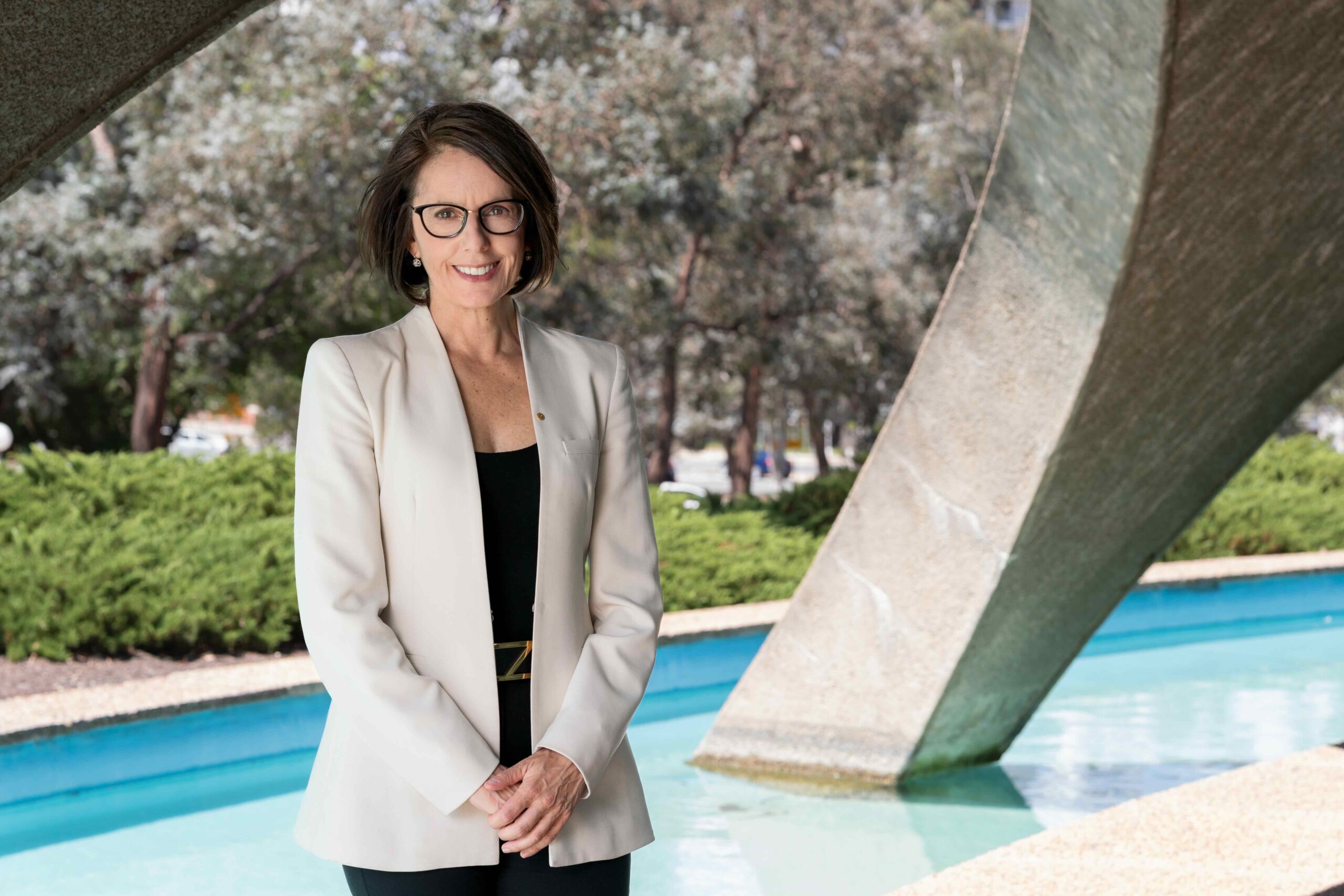
Anna-Maria Arabia OAM is the former Chief Executive of the Australian Academy of Science and a fierce advocate and change-maker in the scientific research and development sector. Laura Timberlake sits down with her to find out more about her career and its highlights, and what’s next on the agenda.
Sitting down to this interview, one couldn’t help but think of how the Vogue features start, describing sumptuous rooms and pretty pastries.
This interview was slightly different. Coffee and morning tea did feature, but it was over a video call.
Arabia was the Chief Executive of the Australian Academy of Science for almost a decade.
“I’ve spent a 30-year career now in science contributing from many different seats,” says Arabia.
That has included working across research in neuroscience, in policy, in politics and leadership roles within scientific organisations. While there have been many highlights, the things that most stand out for her are where she has been able to bring about systemic change.
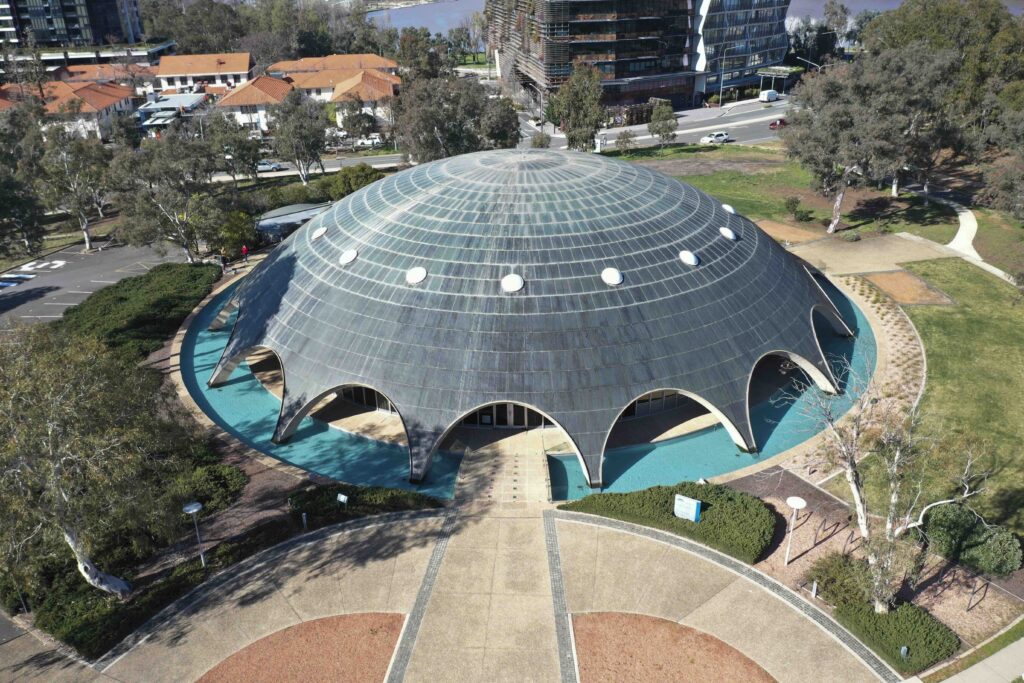
Image courtesy of the Academy of Science.
Bringing science to the table
Arabia talks about how during the COVID-19 pandemic, together with then Chief Scientist, Dr Alan Finkel AC, she led the establishment of the Rapid Research Information Forum (RRIF). The RRIF brought together the wealth of knowledge held by researchers across Australia, synthesised it and made it accessible to government ministers. This helped the Australian Government navigate a sea of uncertainty.
“Whilst establishing a novel scientific advisory mechanism may sound a little dry, what it really means is that the extraordinary knowledge of scientists across our nation
can find its way into informing decision making at the highest level, including within the cabinet and amongst ministers in our government,” Arabia explains.
“It was a system to bring knowledge to decision makers in a timely way, in a highly relevant way; and in a way that I think helped many, many Australians.”
She’s also proud of her work in amending legislation, and amending systems and structures in the defence, national security and legal systems, where science interfaces with those.
In the legal system, Arabia was involved in the high-profile Kathleen Folbigg case.
“Folbigg, who was convicted and imprisoned for 20 years for murdering her four children, was released because we brought science to a judicial inquiry into her convictions showing that the deaths of her children were due to natural causes,” she says.
She worked on the case closely with Professor Carola Vinuesa FAA who performed the genomic analysis of Kathleen Folbigg and her four children.
“We brought scientific evidence to the courtroom, so science could inform the justice system,” she says.
“Our approach demonstrated a different way for the justice system to consider scientific evidence. The case is likely to influence how science is considered in the legal system.”
Recognition and scientific sovereignty
The establishment of the Pacific Academy of Sciences is another feather in her cap.
“The Pacific Island Nations have scholars, researchers and knowledge holders whose knowledge is rarely utilised or drawn upon to inform regional decisions,” says Arabia.
“Rather, foreign and international bodies set up agencies, like UN bodies and others, that import knowledge and seek to apply it to the Pacific context, rather than draw on local knowledge and expertise.
“Up until the establishment of the Pacific Academy of Sciences, there were very few, if any, opportunities for the Pacific Island Nation scholars to come together and to have agency enabling their knowledge to contribute to decisions made about them. That mechanism now exists. To have worked closely with Pacific Island scholars to assist in establishing an Academy of Sciences was a genuine privilege and something I’m proud of.”
Societal impacts
The opportunity to engage the public in science via social media in an accessible, engaging and accurate way is one of the changes she led during her early years at the Academy.
“When I started at the Academy, we had 9,000 Facebook followers. That rose to 2.4 million followers in the less than two years on that platform alone. It required deliberate and sustained effort to engage the public in science.
“There is enormous appetite for scientific content amongst the public and an enormous need to place accurate and engaging science within easy reach to counter disinformation.
“Today, science and technology are moving rapidly and with enormous societal impacts. Think about AI, quantum technology and synthetic biology. It’s critical that the public is engaged in transitions like these that have societal implications. Technology is rarely adopted when it is not trusted and when social licence has not been earnt.”
A leaky pipeline
Arabia has been heavily involved in the Academy’s efforts to advance equity and inclusion in STEM. She led the production and publication of the Women in STEM Decadal Plan (a ten-year strategy to achieve gender equity in science by 2030).
“It documents the barriers and the opportunities for girls and women, who are under-represented in science,” she explains.
“There are of course other underrepresented groups, LGBTIQ+ communities, culturally and linguistically diverse communities, Aboriginal and Torres Strait Islanders, and neurodiverse individuals who are prominent in the science community.
“If we focus on girls and women for a moment, disadvantages are experienced early in the pipeline in primary school when girls are learning about science, right through to women in industry or women in senior levels in research. There are lots of leaks right along that pipeline.”
She says one of the key points when women in science exit the workforce is during childbearing years.
“It’s harder to publish papers when you’re on parental leave,” she says.
However, she has seen some encouraging changes over the years.
“We have seen one of the key research funding agencies, the National Health and Medical Research Council, make changes to grant programs that support senior researchers. Fifty per cent of those grants now go to women-led research projects.
“We’ve seen terrific school programs and initiatives to retain early career researchers. Are we there yet? Absolutely not. Will we achieve gender equity by 2030? Probably not, but it’s not a reason to slow down.”
As a direct response to the Women in STEM Decadal Plan, the Department of Industry, Science and Resources, now has a gender equity monitor. Arabia says it provides annual data of how Australia is tracking. “If you don’t measure it, you can’t manage it,” she says.
“New evaluation tools for government-funded gender equity programs mean we’re more likely to fund programs that work and assist girls and women in STEM.
“So, have things improved? There’s no doubt. Do we have further to go? There is no doubt.”
Advancing equality
Circling back to women in STEM taking career breaks, we discuss how the industry has adapted to allow for family needs.
“The minute you step out of research, you usually stop publishing,” says Arabia. “And it is detrimental to your research career.”
She believes allowing people (both men and women) to take industry or career breaks allows them to become more well-rounded researchers.
“When a company employs a PhD graduate, their adaptive capacity increases,” she says.
“That means their ability to innovate improves because they have staff who are able to apply rigorous scientific methodology and problem-solving skills to tackle challenges.
“We would do well to reduce the negative impact of career breaks and to encourage mobility to and from research and industry.”
First Nations knowledge
The discussion moves on to how the Academy has recognised the value of Indigenous knowledge systems.
“Our First Nations people were our first scientists and innovators and hold
knowledge that we would do well to harness when undertaking research and developing policy,” says Arabia.
“I absolutely need to credit the extraordinary First Nations people who have so generously shared their knowledge with me over years. They have helped me understand, act, lead – they continue to shape my thoughts.
“When we harness First Nations knowledge, we all benefit.
“The way we engage with that knowledge, is different to how non-Indigenous knowledge is created and disseminated.”
She says Indigenous knowledge is not always documented on paper or published in peer-reviewed journals.
“Engaging with Indigenous knowledge systems takes time, it takes cultural competency, patience, respect and deep understanding. And above all, it is built on trusted relationships nurtured over time,” she explains.
“It is very relational, not transactional. And time invested in nurturing relationships and understanding is time well spent. The benefit is disproportionate to the time invested.
“Unfortunately, in our increasingly rapid world, a lot of early relationship building doesn’t happen. It is important to be mindful that our approaches are not extractive.”
Arabia goes on to describe how she (and the Academy) worked with her counterparts at the Royal Society of Canada and the Royal Society Te Apārangi in Aotearoa, New Zealand to establish the Tri-Academy Partnership on Indigenous Engagement, to better learn from and understand First Nations knowledge systems and to work together.
She explains the partnership has evolved over three years.
“Cross-border knowledge sharing and building trusted relationships is enabling each of the countries involved to elevate Indigenous voices in research and academia and to identify and remove barriers for Indigenous knowledge-holders to prosper in our respective countries.”
IAQ: it’s not just physics
Arabia has done a lot of work in the indoor air quality (IAQ) space. One area of focus was advocacy to establish indoor air quality standards because, as she says, their absence remains a significant hole in our public health framework.
“We are very good at measuring and understanding the standard of the food that we eat, the water that we drink and the air that we breathe outdoors,” she says.
“Although we spend 90% of our time indoors, we do not measure the quality of indoor air against agreed standards.
“The management of poor indoor air is not complex. Solutions include mechanical ventilation; filtration; and technology like Germicidal Ultraviolet (GUV) to reduce viral transmission.”
“Establishing and enforcing indoor air quality standards would have a a multitude of benefits.
“Learning and cognition amongst students is diminished when classrooms have poor indoor air quality. Viral transmission is reduced in well-ventilated environments, leading to better health and reduced absenteeism.
“Often very small design changes can make a big difference to the quality of the air we breathe, particularly in workplaces where we spend a lot of time.”
Global action
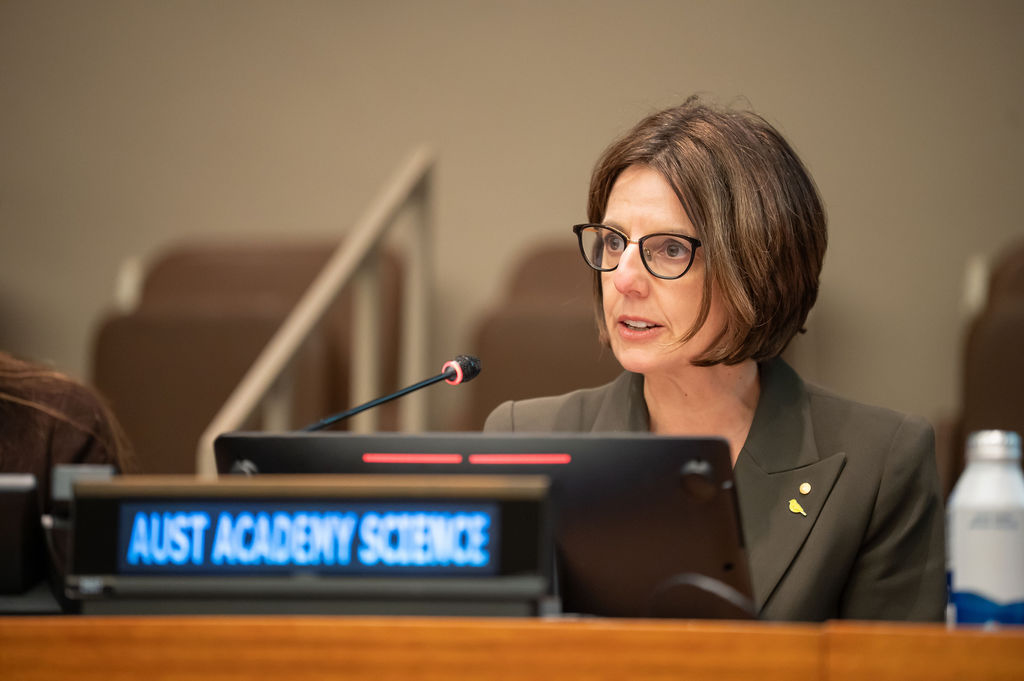
So, just how can the issue be rectified on a larger scale? Arabia mentions the Academy of Science and the Burnet Institute were involved in bringing indoor air quality and the need for indoor air quality standards to the UN General Assembly last year.
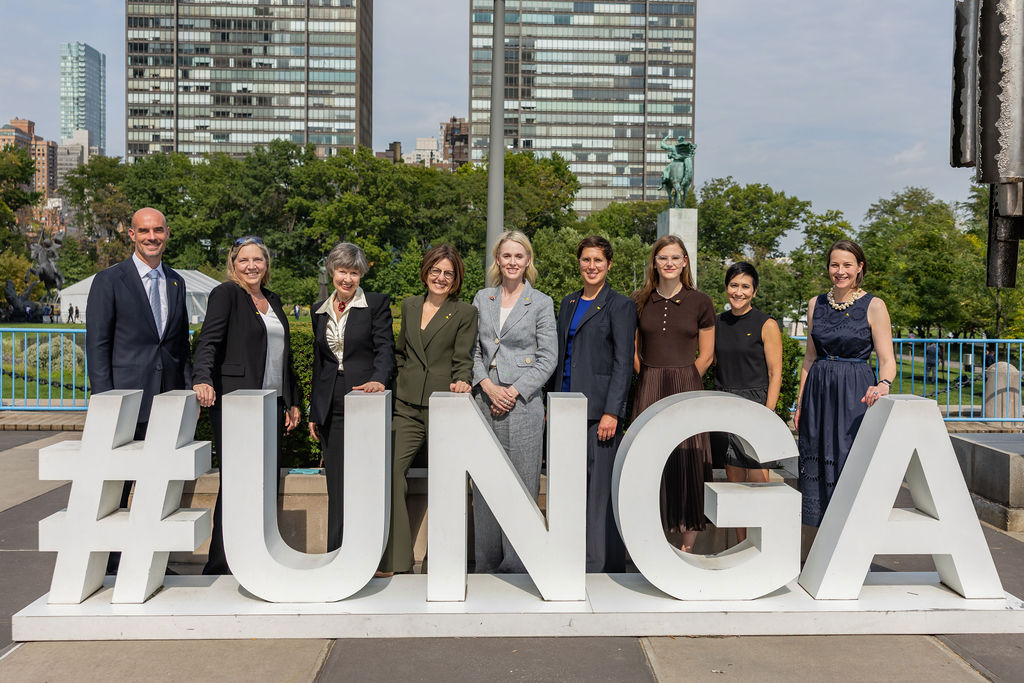
“We worked together with the Burnet Institute and others to host a high-level side event to the UN General Assembly in New York City in September last year,” she says.
“Three hundred global leaders in indoor air quality assembled and signed a global pledge recognising the importance of this issue and the need to take action in their respective nations.
“So that is one way. Working with national governments is another way. International scientific collaboration obviously assists here too.
“But often, persistence is what’s needed with national and international action. It took Australia a very long time to establish water and food standards. None of this happened overnight. I’d like to think it won’t take 80 years to get indoor air quality standards in Australia.”
The next step
After such a highly successful career at the Australian Academy of Science, the obvious question was: what’s next?
Arabia says she’s currently working to accelerate AI adoption across the science sector.
“I’m doing that because Australian research is of the highest quality and it’s internationally competitive,” she says.
“For it to remain internationally competitive, Australia needs to remain at the forefront of knowledge creation. When researchers across the world, especially in North America, the EU and Asia, are using AI to accelerate discovery, Australia risks rapidly falling behind in our ability to generate knowledge. We risk losing our edge.”
She is also concerned that researchers are clear-eyed as they adopt AI tools.
“As more people in the science sector apply AI tools to high value data sets, it is important that the settings are right so that we do not inadvertently export valuable IP with the click of a button and so we don’t create unsustainable platform and pricing dependencies,” she says.
“There are interesting models emerging across the world on how government, industry, philanthropy and the science sector can work together to adopt AI, so it is a force for good. There is much to be done in this area in Australia, so that is where I am focusing my energy.”
This article appears in Ecolibrium’s Winter 2026 edition
View the archive of previous editions
From our advertisers


Recent articles



Latest edition
See everything from the latest edition of Ecolibrium, AIRAH’s official journal.